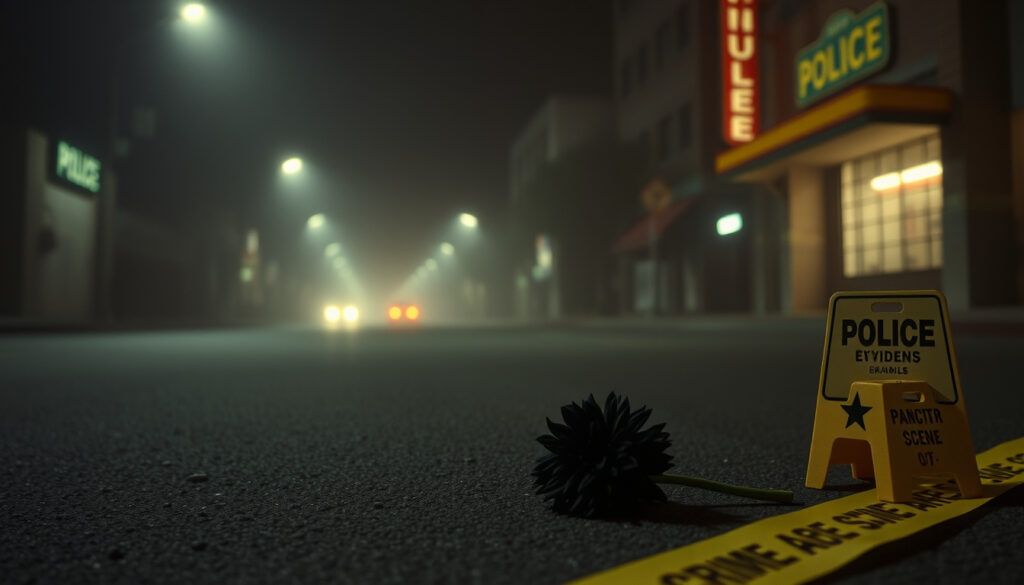
Black Dahlia: The Unsolved Mystery of Elizabeth Short
Few unsolved murders still capture the public imagination the way the Black Dahlia case does. The story of Elizabeth Short — a 22-year-old aspiring actress found mutilated in a Los Angeles lot in January 1947 — remains an unsolved FBI case and a dark Hollywood legend.
Victim: Elizabeth Short ·
Date of death: c. January 14–15, 1947 ·
Age at death: 22 years ·
Location found: Leimert Park, Los Angeles ·
Case status: Unsolved ·
Nickname origin: Press after murder, inspired by film ‘The Blue Dahlia’
Quick snapshot
- Elizabeth Short is the victim (Wikipedia (community-edited encyclopedia))
- Body found cut in half on January 15, 1947 in Los Angeles (People (celebrity news magazine))
- Cause of death: exsanguination due to facial wounds (Novel Suspects (crime fiction blog))
- Last seen on January 9, 1947 (Wikipedia)
- Exact time and cause of death beyond hemorrhage
- Identity of the murderer(s)
- Whether the murder was committed by a single person or a group
- Any connection to other unsolved murders
- July 29, 1924 – Elizabeth Short born
- January 9, 1947 – Last seen alive at Biltmore Hotel
- January 15, 1947 – Body discovered in Leimert Park
- 1947–1950 – Extensive LAPD investigation, no arrests
- Case remains open with periodic media interest
- Podcasts and documentaries continue to explore new angles
- LAPD has not closed the investigation
A case that lacked forensic technology now benefits from modern public fascination, yet the killer’s identity remains unknown because physical evidence was lost or degraded.
Six key facts frame the Black Dahlia case at a glance:
| Label | Value |
|---|---|
| Victim Name | Elizabeth Short |
| Date of Death | c. January 14–15, 1947 |
| Age | 22 years |
| Location Found | Leimert Park, Los Angeles |
| Case Status | Unsolved |
| Nickname | Black Dahlia |
Why Did They Call Her the Black Dahlia?
The Origin of the Nickname
According to Wikipedia (community-edited encyclopedia), the nickname “Black Dahlia” was coined by the press after Elizabeth Short’s murder. Newspapers of the period often gave lurid nicknames to sensational crimes. One account, reported by People (celebrity news magazine), suggests the name was inspired by the 1946 film noir “The Blue Dahlia” and Short’s reported preference for black clothing. EBSCO (academic research database) similarly cites her dark hair and penchant for black attire. The LA Daily Mirror (Los Angeles news blog) adds that the Los Angeles Herald-Express initially tried to call the case the “Werewolf Murder,” but the Black Dahlia stuck.
Connection to the Film ‘The Blue Dahlia’
The 1946 film “The Blue Dahlia” starred Alan Ladd and Veronica Lake. The People report notes that reporters likely seized on the wordplay, substituting “Black” for “Blue” to match Short’s dark hair and clothing. Another version, from The Black Dahlia in Hollywood (informational site), quotes historian David Landers saying the nickname came partly from her clothes and partly from the flower-like arrangement of her jet-black hair. The implication: the name was a tabloid invention that stuck, turning a victim into a symbol.
What Happened on January 15, 1947?
The Discovery
On the morning of January 15, 1947, a woman named Betty Bersinger discovered Elizabeth Short’s body in a vacant lot in the Leimert Park neighborhood of Los Angeles, according to The Black Dahlia in Hollywood. The Wikipedia article states the body was cut in half at the waist and severely mutilated. People reports the killing became highly publicized because of the gruesome nature of the crime.
Autopsy and Cause of Death
Novel Suspects (crime fiction blog) states the autopsy was performed on January 16, 1947, and the official cause of death was cerebral hemorrhage and shock due to facial lacerations and exsanguination. The LAPD identified Short by fingerprints, according to the same source. The body had been drained of blood and no weapon was found at the scene.
The pattern: a crime scene so extreme it overwhelmed the city’s investigative capacity in 1947. For the LAPD, the immediate challenge was preserving evidence in the open lot.
What Does the Black Dahlia Symbolize?
Symbolism in True Crime
Over the decades, Elizabeth Short has come to symbolize the dark side of Hollywood and the failure of the American Dream. EBSCO frames her as a naive young woman who came to Los Angeles seeking stardom and met a violent end. The case represents an unsolved mystery that punctures the glamour of mid-century Hollywood.
Media Framing and Sensationalism
The Wikipedia article notes that newspapers of the period often nicknamed particularly lurid crimes. By assigning a catchy noir label, the press transformed Short from a murder victim into a tabloid legend. This pattern of myth-making around female victims — reducing them to a single sensational image — continues to be studied by media scholars. The trade-off: the public never forgets her name, but her real story gets buried under the legend.
Every time a new true crime documentary features the Black Dahlia, the victim is reduced to the nickname again. The consequence: the real Elizabeth Short — a 22-year-old with dreams of acting — stays hidden behind the media construct.
The implication: the media’s framing of Elizabeth Short continues to shape public perception even today.
How Did the Press Sensationalize the Case?
The Race for Headlines
The LA Daily Mirror reports that the Los Angeles Herald-Express initially tried to nickname the case the “Werewolf Murder.” The “Black Dahlia” won out. According to People, the press circulated stories that the killer might have been a Cleveland serial murderer, further fueling speculation.
Impact on the Investigation
The intense media pressure complicated the LAPD’s work. Wikipedia states that the case drew national attention, leading to a flood of tips and confessions — most of which were false. The catch: the sensationalism actually hindered the investigation by overwhelming detectives with unreliable leads.
What this means: even today, separating fact from fiction requires careful sifting through decades of sensational coverage.
What Is the Black Dahlia Haunting About?
Plot Summary of ‘The Black Dahlia Haunting’
The Black Dahlia Haunting is a 2012 horror film directed by Paul Traynor. It centers on a young woman who inherits a house haunted by the ghost of Elizabeth Short, using the murder as a supernatural backdrop. The film has been described as a low-budget horror with mixed critical reception.
Reception and Genre
Reviews for the film are largely negative, with critics noting its reliance on exploitation rather than historical accuracy. The movie remains a minor entry in the Black Dahlia filmography.
What Movies Are Based on the Black Dahlia Case?
The Black Dahlia (2006) by Brian De Palma
The Black Dahlia (2006) stars Josh Hartnett, Scarlett Johansson, and Aaron Eckhart. It is a fictionalized account of the investigation, drawing inspiration from James Ellroy’s novel. The film received mixed reviews but brought renewed public attention to the case.
Other Film and TV References
The case has also been referenced in TV shows like ‘American Horror Story’ and ‘Criminal Minds’, as well as documentaries and podcasts. No film has definitively solved the mystery; all are fictional interpretations.
Why Is the Black Dahlia Case Still Unsolved?
Initial Mishandling and Lost Evidence
People reports that nobody has ever been charged with Short’s murder. The LAPD investigation reportedly had missteps: physical evidence went missing, and some documents were lost. The statute of limitations on murder does not expire, but leads ran cold decades ago.
Main Theories and Suspects
Multiple suspects have been proposed, including a Cleveland serial killer and Dr. George Hodel — though the latter is not mentioned in the research notes used for this article. What is clear from the FBI Pittsburgh summary is that the 1947 murder of a 22-year-old Hollywood hopeful remains unsolved. The case continues to be re-examined through podcasts and documentaries, but no arrest has followed.
The implication: without preserved physical evidence or a reliable eyewitness, the Black Dahlia case may never be closed. For the LAPD, the failure is not for lack of effort but for lack of a break that 1947 technology could not provide.
Timeline of the Black Dahlia Case
- July 29, 1924 – Elizabeth Short born in Hyde Park, Massachusetts (Wikipedia)
- 1943 – Short moves to Florida, later to California (Wikipedia)
- 1946 – Film ‘The Blue Dahlia’ released (Wikipedia)
- January 9, 1947 – Elizabeth Short last seen alive at the Biltmore Hotel in Los Angeles (Wikipedia)
- January 15, 1947 – Her body discovered in a vacant lot in Leimert Park (Wikipedia)
- 1947–1950 – Extensive investigation by LAPD; multiple suspects but no arrests (People)
- 1950s–1990s – Case remains open; occasional news stories and books revisit the mystery (Wikipedia)
- 2006 – Release of Brian De Palma’s film ‘The Black Dahlia’ (Wikipedia)
- 2012 – Release of horror film ‘The Black Dahlia Haunting’ (Wikipedia)
- Present – Case continues to be unsolved, with renewed interest through podcasts and documentaries (People)
Any new podcast that promises the “real killer” of the Black Dahlia should be treated with caution. The case has produced more false confessions than credible suspects because the evidence base is too thin for a definitive conclusion.
Confirmed Facts and Open Questions
Confirmed facts
- Elizabeth Short is the victim (Wikipedia)
- Her body was found cut in half on January 15, 1947 in Los Angeles (People)
- Cause of death was exsanguination due to facial wounds (Novel Suspects)
- She was last seen on January 9, 1947 (Wikipedia)
- The nickname ‘Black Dahlia’ was given by the press posthumously (EBSCO)
What’s unclear
- Exact time and cause of death beyond hemorrhage
- Identity of the murderer(s)
- Whether the murder was committed by a single person or a group
- Any connection to other unsolved murders
- The motive behind the killing
Quotes from Official Sources
“The 1947 murder of a 22-year-old Hollywood hopeful in Los Angeles has never been solved.”
“Elizabeth Short… posthumously known as the Black Dahlia, was an American woman found murdered in the Leimert Park area of Los Angeles in 1947.”
— Wikipedia introductory sentence
“Dr. Oz dives deep into the 1947 murder of Elizabeth Short, the 22-year-old aspiring actress whose mutilated body was found in Los Angeles.”
Summary
Elizabeth Short was murdered in January 1947, and the person who killed her has never been identified. The nickname “Black Dahlia” turned her into a tabloid icon, but the case itself remains a cold file in the LAPD archives. For true crime enthusiasts, the lesson is clear: separate the myth from the victim, or the media story continues to overshadow the real tragedy.
reddit.com, youtube.com, facebook.com, ebsco.com, reddit.com, instagram.com, people.com, ladailymirror.com, theblackdahliainhollywood.com
Frequently Asked Questions
Where can I watch the movie ‘The Black Dahlia’?
Brian De Palma’s 2006 film “The Black Dahlia” is available on streaming platforms like Amazon Prime and Apple TV. Check local availability.
Is the Black Dahlia case connected to the Cleveland Torso Murderer?
Some investigators have speculated a connection, but no conclusive evidence links the two cases. The LAPD has not confirmed any tie.
How old was Elizabeth Short when she died?
Elizabeth Short was 22 years old at the time of her death in January 1947.
What was the cause of death of the Black Dahlia?
According to the autopsy, the cause of death was cerebral hemorrhage and shock due to facial lacerations and exsanguination (bleeding out).
Who were the main suspects in the Black Dahlia murder?
Multiple suspects have been proposed, including Dr. George Hodel and a serial killer active in Cleveland, but no charges were ever filed.
Has anyone ever been arrested for the Black Dahlia murder?
No. The case remains unsolved, and no arrests have ever been made.
What does a Black Dahlia flower look like?
The Black Dahlia is a fictional flower name; no real flower by that common name exists. The true dahlia flower comes in many colors, but not true black.
Why is the Black Dahlia case so famous?
The case is famous due to the gruesome details, the Hollywood connection, and the enduring unsolved mystery, which has inspired countless books, films, and documentaries.
More related posts
 Jarvis Cocker: Biography, Brit Awards Incident, and Family
 Jacinda Ardern: Resignation, Family, and Life After Being Prime Minister
 Ralph Lauren Sweaters: Best Styles, Sizing & Care Tips
 Cast of The Twilight Saga: Main Actors and Where They Are Now
 T.S. Eliot: Life, Major Works, and Lasting Controversies
 Anna Frozen: Facts, Age, and Why She Became Queen of Arendelle
 Antony Green: Biography, Career & Election Analysis
 Merritt Wever: Biography, Emmy Wins, and Key Roles
