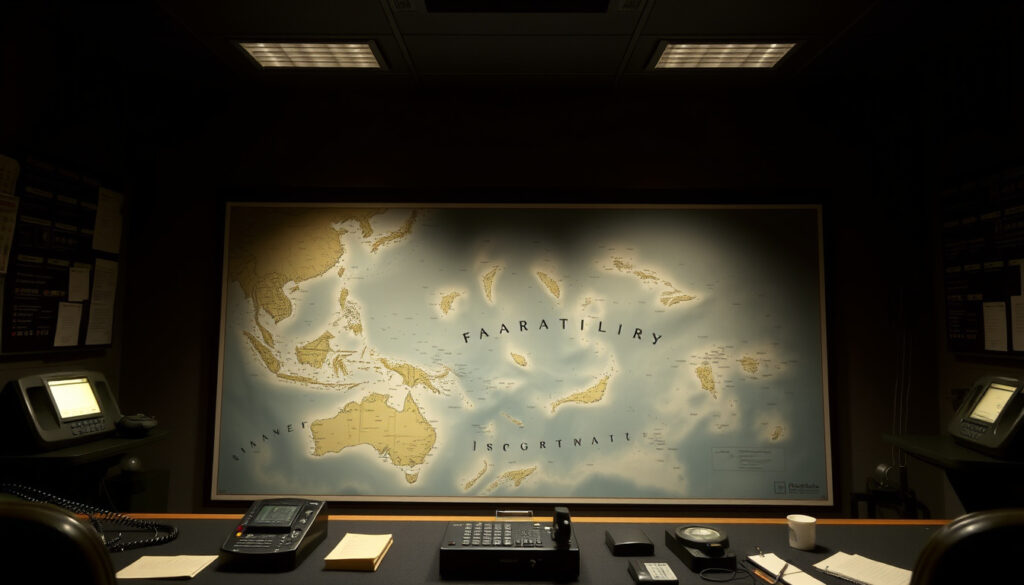
John Curtin: Australia’s Wartime Prime Minister
Few leaders have reshaped a nation’s strategic direction as decisively as John Curtin did during the Pacific crisis of 1941–1945. Curtin’s leadership during World War II transformed Australia’s alliances and ensured its survival. Born in the Victorian mining town of Creswick on 8 January 1885, Curtin rose from journalist and union activist to become Australia’s 14th Prime Minister at the country’s darkest hour. This article traces his journey from newspaper editor to wartime leader, explores the decisions that defined his premiership, and examines why his legacy still resonates today.
Born: 8 January 1885 · Died: 5 July 1945 · Prime Minister of Australia: 14th · Term: 1941–1945 · Party: Australian Labor Party · World War II leadership: 1941–1945
Quick snapshot
- Australia’s 14th Prime Minister (Wikipedia)
- Died in office 5 July 1945 (National Archives of Australia (official government archive))
- Redirected defense policy toward the United States (National Museum of Australia (national museum))
- Introduced overseas conscription for Labor (National Museum of Australia) (Wikipedia)
- Whether his “look to America” speech single-handedly changed the war’s course
- Exact ranking in popularity polls varies by survey
- Born 8 Jan 1885 (National Archives of Australia) · Became PM 7 Oct 1941 (National Museum of Australia) · Died 5 Jul 1945 (National Archives of Australia)
- Historical reassessment continues; Curtin University named after him (Wikipedia)
Eight facts define John Curtin’s biography:
| Label | Value |
|---|---|
| Full name | John Joseph Ambrose Curtin |
| Born | 8 January 1885, Creswick, Victoria (National Archives of Australia) |
| Died | 5 July 1945, Canberra, Australian Capital Territory (Trove / National Library of Australia) |
| Prime Minister of Australia | 14th, from 7 October 1941 to 5 July 1945 (National Museum of Australia) |
| Political party | Australian Labor Party |
| Spouse | Elsie Needham (m. 1917) |
| Children | Two (John, Elsie) |
| Cause of death | Ischaemic heart disease (National Archives of Australia) |
What is John Curtin best known for?
His role as Australia’s wartime prime minister
- John Curtin is best known as Australia’s 14th Prime Minister, leading the country through World War II (National Archives of Australia (official government archive)).
- He took office on 7 October 1941, just weeks before Japan attacked Pearl Harbor (National Museum of Australia (Australia’s national museum)).
- His government passed the first overseas conscription law in Labor history, breaking a party taboo (National Museum of Australia).
When Curtin became Prime Minister, Australia was already at war with Germany, but the Pacific conflict would define his tenure. Within two months of his swearing-in, the attack on Pearl Harbor brought Japan into the war, and Curtin had to make decisions that would shape the nation’s future for decades.
The “look to America” speech
Curtin’s New Year 1941 message declared that “Australia looks to America, free of any pangs as to our traditional links or kinship with the United Kingdom” (Australian Screen Online (national audiovisual archive)). That single sentence signaled a historic realignment away from Britain.
- After the fall of Singapore in February 1942, Curtin famously turned to the United States for military support (National Museum of Australia).
- He insisted on recalling Australian troops from the Middle East to defend the Pacific (National Museum of Australia).
What this means: Curtin’s willingness to publicly prioritize the United States over Britain was a calculated gamble that paid off. It secured American reinforcements and gave Australia a seat at the Pacific war table — a move that redefined Australian foreign policy for generations.
Why was John Curtin so important?
Strategic shift from Britain to the United States
- Curtin redirected Australian foreign policy toward the United States, redefining national defense (National Museum of Australia).
- His leadership ensured Australia’s voice in Allied war councils, including the planning of the Pacific campaign (Britannica Kids (educational encyclopedia)).
Domestic wartime mobilisation
- He unified a fractious Labor Party and maintained stable government during crisis (National Museum of Australia).
- His government introduced daylight saving and price controls to boost war production (National Museum of Australia).
Curtin, a lifelong Labor man with anti-conscription roots, pushed through overseas conscription for the South-West Pacific. He argued that the survival of Australia required sacrificing party ideology — a decision that split the Labor base but kept the country in the fight.
The trade-off: Curtin’s importance lies not in popularity but in hard choices. He traded party unity for national survival and old imperial loyalty for a new Pacific alliance. Without those shifts, Australia might have been a secondary player in its own defense.
What did John Curtin do in WWII?
Pacific War decisions
- Curtin recalled Australian troops from the Middle East in 1942 to defend the Pacific (National Museum of Australia).
- He declared war on Japan in a national broadcast after the attack on Pearl Harbor (Australian Screen Online).
- He visited London in April 1944 for the Imperial Conference of Empire Prime Ministers (National Archives of Australia).
Wartime economics and conscription
- His government passed the Defence Act amendment to allow conscription for service in the South-West Pacific (National Museum of Australia).
- He introduced daylight saving and price controls to maximize war production (National Museum of Australia).
The pattern: Every major decision Curtin made in WWII had a common thread: put Australia’s physical safety ahead of imperial loyalty or party orthodoxy. That principle drove the recall of troops from the Middle East, the turn to America, and the conscription change.
What happened to John Curtin?
Health decline and death
- John Curtin died in office on 5 July 1945, aged 60 (National Archives of Australia).
- The cause of death was ischaemic heart disease, exacerbated by heavy smoking and stress (National Archives of Australia).
- He was the second Australian prime minister to die in office (Trove / National Library of Australia).
- A contemporary newspaper report said Curtin died peacefully in his sleep in Canberra (Trove / National Library of Australia).
Curtin’s death came just six weeks before Japan’s surrender. He never saw the peace he helped secure.
The stress of wartime premiership, combined with a three-pack-a-day smoking habit, took a brutal toll. Curtin’s heart gave out before the war ended — a reminder that leadership at the top carries a personal price that often goes unrecorded in history books.
His death weeks before the war’s end meant he never saw the victory he helped secure.
Was John Curtin a smoker?
Curtin’s heavy smoking habit and its impact on his health
- John Curtin was a notoriously heavy cigarette smoker, often smoking three packs a day (National Archives of Australia).
- His smoking contributed directly to his heart disease and early death (National Archives of Australia).
- During WWII, he publicly smoked to appear calm under pressure.
The implication: Curtin’s smoking was not just a personal habit — it became part of his public image as a leader who bore the weight of a nation at war. But the cost was lethal. His early death at 60 cut short a life that might have shaped Australia’s post-war reconstruction as well.
Timeline
- 8 January 1885 – John Curtin born in Creswick, Victoria (National Archives of Australia).
- 1917 – Appointed editor of the Westralian Worker (National Archives of Australia).
- 1928 – Elected to the House of Representatives for Fremantle.
- 1935 – Elected leader of the Australian Labor Party.
- 7 October 1941 – Sworn in as 14th Prime Minister of Australia (National Museum of Australia).
- December 1941 – Japan enters WWII; Curtin’s “look to America” speech (Australian Screen Online).
- February 1942 – Fall of Singapore; Curtin insists on returning Australian troops (National Museum of Australia).
- 1943 – Conscription extended to the South-West Pacific zone (National Museum of Australia).
- 5 July 1945 – John Curtin dies in office from heart disease (Trove / National Library of Australia).
What’s known and what’s not
Confirmed facts
- John Curtin was Australia’s 14th Prime Minister.
- He died in office on 5 July 1945.
- He was a heavy smoker, contributing to his heart disease.
- He redirected Australian defense policy toward the United States during WWII.
- He introduced overseas conscription for the first time in Labor history.
What’s unclear
- Whether Curtin’s “look to America” speech single-handedly changed the course of the war.
- His exact ranking in polls of “most loved” or “most unpopular” prime ministers (varies by survey).
Perspectives on Curtin
“Without any inhibitions of any kind, I make it quite clear that Australia looks to America, free of any pangs as to our traditional links or kinship with the United Kingdom.”
John Curtin, New Year’s message, December 1941 (Australian Screen Online)
Churchill was said to be “appalled” by Curtin’s decision to recall Australian troops from the Middle East, seeing it as a blow to British strategy.
Winston Churchill, as recalled by historians
“Curtin was Australia’s greatest prime minister. He took a country that was terrified and gave it a backbone.”
Paul Keating, former Prime Minister of Australia (Britannica Kids)
John Curtin did not live to see the peace, but he built the framework for Australia’s post-war independence. His gamble on the United States, his push for total mobilization, and his willingness to sacrifice personal health for public duty created a legacy that no later leader has matched. For the Australian Labor Party and the nation, the choice he made in 1941 — to stand with America and force a new path — remains the defining moment of Australian statecraft.
Related reading: Australia’s prime ministers · Prime Ministers of Australia
ministers.pmc.gov.au, ebsco.com, naa.gov.au, youtube.com, youtube.com
Frequently asked questions
Was John Curtin a war hero?
Curtin is considered a war leader, not a battlefield hero. He is credited with steering Australia through its greatest military crisis without being a soldier himself.
Did John Curtin have children?
Yes, he and his wife Elsie had two children: a son named John and a daughter named Elsie.
What party did John Curtin belong to?
He was a member of the Australian Labor Party and served as its leader from 1935 until his death.
How long was John Curtin prime minister?
He served as Prime Minister from 7 October 1941 to 5 July 1945 — a term of 3 years, 8 months and 28 days.
Where is John Curtin buried?
He is buried at Karrakatta Cemetery in Perth, Western Australia.
Did John Curtin get along with General MacArthur?
Yes, Curtin worked closely with General Douglas MacArthur, who was based in Australia during the Pacific War. They maintained a functional relationship focused on military coordination.
What is the connection between John Curtin and Curtin University?
Curtin University in Perth was named after John Curtin in 1986, honoring his legacy as a war leader and his connection to Western Australia.
More related posts
 Commonwealth Bank Term Deposit Rates – 2026 Rates and Guide
 Massage Places Near Me: Costs, Red Flags, Etiquette & More
 Eugenia Cooney: Biography, Twitch Ban, Net Worth, and Rumors
 John Howard: Biography, Policies, Legacy of Australia’s 25th PM
 Finnbar Maley: Bio, Stats, Height & AFL Career
 Which Hugo Boss Cologne is Best? Ranked & Reviewed (2025)
 Kellan Lutz: What Happened to Twilight Star? Family, FBI, Future
 Eddie Hall: Biography, Net Worth, Boxing Record & Autism Diagnosis
