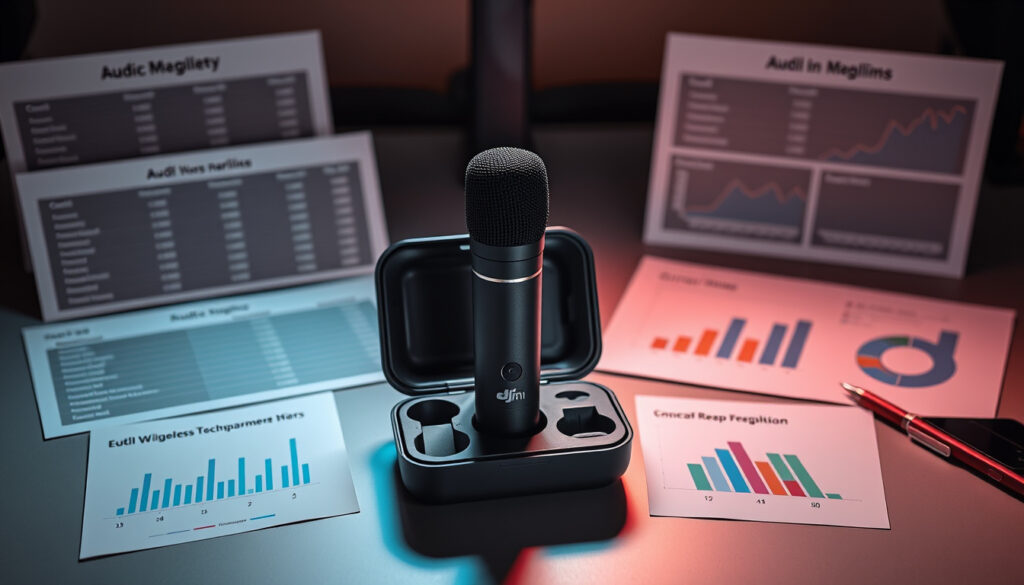
DJI Mic Mini – Specs, Comparison and Value Guide
The DJI Mic Mini represents a deliberate shift in DJI’s wireless microphone strategy. Where the DJI Mic 2 targets professionals who need advanced features like 32-bit float recording and internal storage, the Mic Mini prioritizes portability and endurance. Weighing just 10 grams per transmitter, the device disappears on camera while delivering up to 11.5 hours of battery life per unit. Early adopters describe the experience as transformative for extended shoots, with the charging case extending total runtime to approximately 18 hours across three full cycles.
Launched as the more budget-conscious option in DJI’s microphone lineup, the Mic Mini enters a competitive segment where creators weigh simple operation against professional capabilities. The system lacks touchscreen controls and internal recording, but compensates with plug-and-play simplicity and a transmission range that exceeds its elder sibling by 150 meters. Retail pricing for the two-transmitter combo kit stands at $169, representing less than half the cost of the comparable DJI Mic 2 bundle.
What is the DJI Mic Mini?
The DJI Mic Mini is a compact wireless microphone system engineered for content creators, vloggers, and beginners who need reliable audio without the complexity of professional studio equipment. The system comprises two transmitters, a single receiver, and a charging case in its standard combo configuration. Unlike traditional wired microphones, the Mic Mini operates wirelessly across a 400-meter line-of-sight range, enabling creators to capture audio from subjects at considerable distances from their recording device.
At its core, the Mic Mini emphasizes ease of use. The receiver features a spring-loaded clip designed for straightforward mounting on camera shoes or mobile devices. There is no touchscreen interface, no complex menu system, and no requirement for companion applications. Users simply connect the receiver to their device, power on the transmitters, and begin recording immediately. This approachability makes the system particularly attractive to creators transitioning from built-in camera microphones or entry-level wireless solutions.
The Mic Mini omits internal recording functionality entirely. Audio is captured directly through the wireless connection, meaning any interruption in the signal results in lost audio. Professionals requiring redundant backup recording may need to consider the Mic 2 for its on-board 8GB storage capability.
Overview Comparison
| Specification | DJI Mic Mini | DJI Mic 2 |
|---|---|---|
| Transmitter Weight | 10g (0.35 oz) | 28g (0.99 oz) |
| Battery Life (per TX) | 11.5 hours | 6 hours |
| Transmission Range | 400m (1,312 ft) | 250m (820 ft) |
| Internal Recording | No | Yes (32-bit float, 8GB) |
Key Insights
- Transmitter design is approximately 30% smaller than the Mic 2, making it barely noticeable during wear
- Total system battery life reaches 18 hours when combining transmitter runtime with the charging case reserves
- Noise cancellation algorithms produce cleaner results with fewer processing artifacts compared to the Mic 2
- The system operates without requiring smartphone applications for iOS or Android devices
- Camera compatibility remains strong through direct plug-in connections
- The absence of an external microphone input limits lavalier microphone support
Technical Snapshot
| Spec | Detail |
|---|---|
| Transmitters | 2× clip-on transmitters |
| Receiver | Lightning/USB-C connectivity |
| Battery | 5.5hr per TX + case reserves |
| Price | $169 combo kit |
DJI Mic Mini Specs and Performance
Battery Life and Charging
Battery performance represents the Mic Mini’s most significant advantage over its predecessor. Each transmitter delivers 11.5 hours of continuous operation according to official specifications, with real-world testing confirming performance exceeding 10 hours in typical shooting conditions. The charging case accepts three complete transmitter recharges, effectively multiplying single-charge endurance by approximately four. This configuration proves particularly valuable for all-day shoots, travel documentation, or events where access to power outlets remains limited.
Charging occurs via the case’s built-in battery, eliminating the need for separate cables or power adapters during location work. The case itself maintains a compact footprint, slipping easily into camera bags or jacket pockets alongside the transmitters and receiver. For those seeking additional insights into wireless microphone technology, comprehensive reviews of best wireless microphones are available.
The charging case requires approximately 90 minutes to fully replenish a depleted transmitter. Plan accordingly when transitioning between shooting locations with limited downtime.
Transmission Range and Signal Stability
The Mic Mini transmits across 400 meters (1,312 feet) under optimal line-of-sight conditions, surpassing the Mic 2’s 250-meter ceiling by 60%. This extended range accommodates scenarios where subjects move freely across larger spaces, such as outdoor events, stage performances, or documentary-style captures where maintaining proximity proves impractical. Signal stability within the specified range remains consistent in reported use cases, though environmental factors including physical barriers and competing wireless devices can affect performance.
Audio Quality and Noise Cancellation
Improved noise cancellation distinguishes the Mic Mini from the Mic 2 in comparative testing. The Mini’s algorithms produce cleaner, more natural audio in challenging environments like outdoor events with background crowd noise or indoor spaces with HVAC systems. Processing artifacts that occasionally appear in Mic 2 recordings occur less frequently with the Mini, though the system still relies on digital processing rather than physical isolation.
The absence of internal recording means audio quality depends entirely on maintaining a stable wireless connection. Users operating in areas with significant electromagnetic interference may experience dropouts that cannot be recovered through on-device backup systems.
Physical Design and Wearability
Weighing 10 grams per transmitter, the Mic Mini sits noticeably lighter than the 28-gram Mic 2. This reduction makes the device suitable for lightweight clothing where heavier clip-on units might pull or shift. Reviewers note that subjects frequently forget they are wearing the microphone, an observation that speaks to both the physical comfort and the unobtrusive aesthetic of the system. For creators interested in lightweight audio solutions, exploring lavalier microphone options can complement this wireless setup.
DJI Mic Mini vs DJI Mic 2
Choosing between the Mic Mini and Mic 2 requires understanding the tradeoffs between portability and professional capability. The Mic Mini delivers superior battery life, lighter weight, extended range, and better noise cancellation characteristics. It represents approximately 80% of the Mic 2’s functionality at less than half the price, positioning it as the logical choice for creators prioritizing simplicity and endurance.
The Mic 2 justifies its premium pricing through features absent from the Mini. Internal 32-bit float recording captures audio that can be recovered in post-production when clipping occurs, providing a safety net that the Mini cannot offer. The 8GB storage capacity holds approximately 14 hours of audio at standard quality settings. External microphone input enables lavalier connections for more discreet placement, and the touchscreen receiver provides visual feedback and adjustment options unavailable on the Mini.
The Mic Mini’s lack of internal recording means signal interruptions result in permanent audio loss. Creators working in mission-critical scenarios may prefer the Mic 2’s redundant recording capability despite its higher cost and shorter battery life.
Phone compatibility remains comparable between the two systems. Both integrate with iOS and Android devices without requiring additional applications. Camera connectivity proves reliable for both units, though the Mic 2 edges out marginally in certain smartphone synchronization scenarios according to comparative testing. Those comparing options should review smartphone filming gear guides to understand compatibility requirements.
| Feature | DJI Mic Mini | DJI Mic 2 |
|---|---|---|
| Battery Life | 11.5 hours | 6 hours |
| Range | 400m | 250m |
| Weight (TX) | 10g | 28g |
| Internal Recording | No | Yes (32-bit float, 8GB) |
| Combo Price | $169 | $350 |
| Noise Cancellation | Superior/natural | Good but artifact-prone |
DJI Mic Mini Price and Where to Buy
The DJI Mic Mini combo kit retails at $169 MSRP, encompassing two transmitters, one receiver, and a charging case. This positioning places the Mini at the midpoint between entry-level consumer microphones and professional broadcast equipment. Individual components remain available separately for users requiring customization, though the combo represents the most common purchase path. For those evaluating budget considerations, vlogging equipment guides under $200 provide additional context.
Regional pricing varies across markets, with European availability marked at approximately €150 and Vietnamese markets listing around 3.7 million VND. Basic vlogging configurations may be available from $70 using single-unit purchases, while comprehensive kits with additional accessories typically approach $150 in practical retail scenarios.
Value Assessment
The Mic Mini’s price-to-feature ratio emerges as its strongest market argument. Delivering approximately 80% of the Mic 2’s capabilities at under 50% of the cost, the Mini addresses creators who recognize the value of extended battery life and lightweight design without requiring the professional redundancy features that drive Mic 2 purchases. For casual content creation, travel documentation, and everyday vlogging, the price point removes significant barrier-to-entry concerns.
The system represents exceptional value for beginners entering wireless audio capture. The learning curve remains minimal, with plug-and-play operation requiring no technical background. Experienced creators upgrading from built-in camera microphones report immediate quality improvements at a reasonable investment level.
Availability Considerations
Product availability varies by region and retailer. Official DJI distribution channels provide the most reliable sourcing method, though authorized resellers and electronics retailers also carry the system. Checking availability before purchase remains advisable, particularly for buyers outside major metropolitan areas where inventory rotation may proceed more slowly.
Release Timeline and Availability
The DJI Mic Mini launched as a newer, budget-focused alternative to the Mic 2. Review comparisons from 2025 and 2026 indicate product availability established by mid-2025, though precise original announcement and release dates remain somewhat unclear across available sources. The product entered markets positioning itself as the more accessible option within DJI’s wireless microphone family.
- Mid-2025: Product availability established in retail channels
- 2025-2026: Review comparisons and user testing publications emerge
- Current period: Active retail availability through DJI and authorized resellers
Firmware update history for the Mic Mini remains undocumented in currently available sources. Users should check DJI’s official support channels for the latest software versions and improvement releases.
What We Know and What Remains Unclear
Official specifications are verified through DJI documentation and multiple independent reviews. Pricing, battery life, range, and weight figures appear consistently across sources. The combo kit contents (two transmitters, one receiver, charging case) and retail pricing ($169) are established facts.
| Established Information | Unresolved Questions |
|---|---|
| Official specs confirmed (11.5hr battery, 400m range, 10g weight) | Long-term durability reports pending |
| Release date solid (mid-2025 availability) | Noise cancellation efficacy in sustained high wind |
| Price point verified ($169 combo) | Osmo Pocket-specific compatibility details |
| Feature comparison with Mic 2 documented | Rode Wireless Go direct comparison data |
Market Position and Target Users
The DJI Mic Mini occupies a specific niche within the expanding compact creator microphone segment. Its design philosophy centers on removing barriers rather than adding features—simpler operation, longer battery life, lighter weight, and extended range appeal to creators who prioritize portability and endurance over advanced post-production capabilities.
Primary target users include vloggers seeking unobtrusive audio capture, event videographers requiring all-day battery performance, and beginners entering wireless audio for the first time. The system’s plug-and-play simplicity reduces the technical learning curve that often discourages new creators from investing in dedicated microphone equipment.
Professional users may find the Mic Mini suitable as a secondary system for less demanding shoots where the Mic 2’s advanced features remain unnecessary. The lighter weight proves advantageous for gimbal-mounted setups where transmitter mass directly affects balance and stabilizer performance.
Customer Feedback and Real-World Assessment
Reviews from 2025-2026 document consistent praise for the Mic Mini’s battery performance and portability. Users describe the device as “changing everything for long shoots,” with multiple reviewers noting they forget they are wearing the transmitter. The system’s value proposition resonates strongly, with consensus forming around the “80% functionality at half price” characterization.
The Mini delivers audio quality that rivals full-size microphones in most practical scenarios. The improvements over built-in camera audio are immediately noticeable and substantial.
The Mic 2 maintains its appeal among professionals who value the 32-bit float recording as insurance against clipping mistakes. Reviewers describe the feature as a “lifesaver for clips” where audio peaks would otherwise ruin takes. However, the Mic 2’s shorter battery life and larger form factor generate criticism from users who prioritize convenience over redundancy.
For backup recording and post-production flexibility, the Mic 2 remains indispensable. The battery limitations are frustrating, but the 32-bit float capability has saved projects that would otherwise require reshoots.
Final Assessment
The DJI Mic Mini succeeds as a focused response to creator priorities that differ from professional broadcast requirements. Its 11.5-hour battery life, 400-meter range, and 10-gram weight deliver tangible benefits that enhance practical shooting experiences. The $169 price point makes wireless audio accessible to creators who might otherwise rely on camera-mounted alternatives or entry-level solutions with limited capability.
Users requiring redundant internal recording, external microphone input, or touchscreen control should consider the Mic 2 despite its higher cost. Those prioritizing portability, endurance, and straightforward operation will find the Mini represents a compelling balance of capability and value. The decision ultimately hinges on whether specific professional features justify doubling the investment, or whether the Mini’s practical advantages better serve the intended use case. For more on emerging audio technology, see our guide to Best Robot Vacuum Australia – Top Tested Picks 2024 and iPhone Air 17 – Specs, Price and Launch Details.
Frequently Asked Questions
Is the DJI Mic Mini worth buying for beginners?
The DJI Mic Mini represents an excellent entry point for creators new to wireless audio. Its plug-and-play operation requires no technical expertise, while the $169 price point avoids significant investment risk. Battery life and range exceed expectations for the category, providing reliable performance for everyday content creation.
How does the DJI Mic Mini connect to smartphones?
The receiver includes Lightning or USB-C connectivity options depending on the version purchased. Connection to iOS and Android devices occurs without companion applications, requiring only physical attachment to the device’s port. Both transmitters pair automatically with the receiver upon power-on.
Can the DJI Mic Mini record audio internally?
No. The Mic Mini lacks internal recording capability entirely. Audio captures only through the wireless transmission link between transmitters and receiver. Any signal interruption results in audio loss, making the Mic 2 the better choice for scenarios requiring redundant backup recording.
What is the effective transmission range of the DJI Mic Mini?
The Mic Mini transmits up to 400 meters (1,312 feet) under optimal line-of-sight conditions. Environmental factors including physical barriers and wireless interference can reduce practical range. This specification exceeds the Mic 2’s 250-meter ceiling by 60%.
How long does the DJI Mic Mini battery last?
Each transmitter operates for 11.5 hours per charge according to official specifications. Real-world testing confirms performance exceeding 10 hours in typical use. The charging case holds three additional full charges, extending total system runtime to approximately 18 hours before requiring external power.
Is the DJI Mic Mini compatible with the Osmo Pocket?
Direct Osmo Pocket compatibility details remain undocumented in available sources. The Mic Mini’s standard receiver connections suggest potential compatibility with devices featuring USB-C or Lightning ports, though specific integration with DJI’s Osmo ecosystem requires verification through official documentation.
What accessories come included with the DJI Mic Mini combo kit?
The combo kit includes two transmitters, one receiver, and a charging case. Wind shields, adapter cables, and additional mounting hardware may vary by retailer bundle. Checking specific listing contents before purchase ensures alignment with intended use requirements.
More related posts
 Lori Petty: Biography, Health, Relationships & Net Worth
 CatDog: The Complete Guide to the Nickelodeon Cartoon
 Taylor Frankie Paul: Diagnosis, Relationships, Sobriety & More
 Wedding Anniversary Gifts by Year: Traditional & Modern Ideas
 St Thomas Aquinas: Biography, Five Ways, and Natural Law
 Jasmine Rice: How to Cook, Health Benefits, vs Basmati & White
 Sophie Rain OnlyFans: Bio, Earnings & Platform Facts
 Chicken Thigh Recipes: Best Methods for Crispy Skin & Tender Meat
