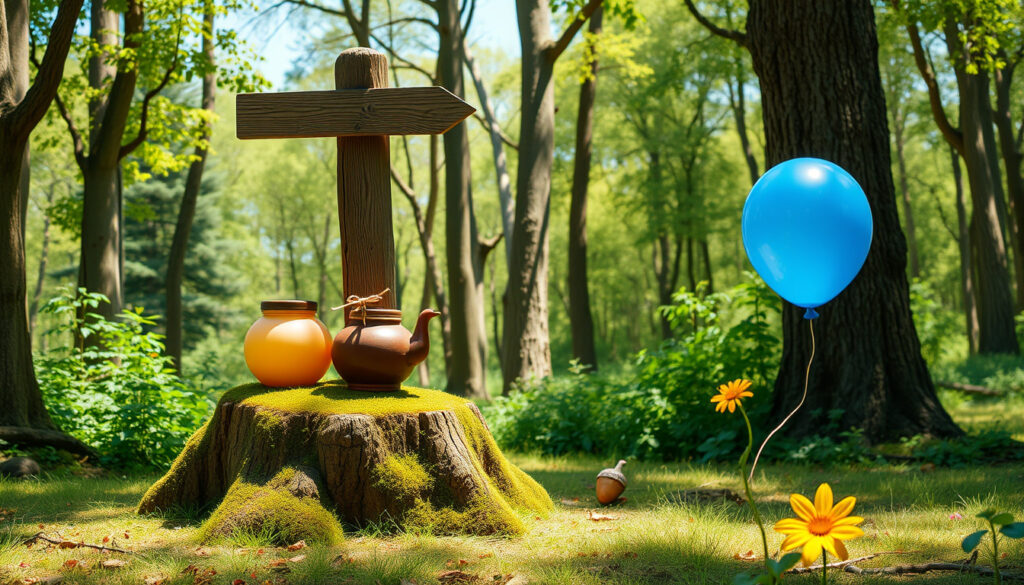
Winnie the Pooh Characters: Friends, Neurodiversity & Facts
There’s a reason the Hundred Acre Wood still feels like a second home to generations of readers—it’s a place where every character feels like someone you know. The first Winnie-the-Pooh book was published in 1926 (Wikipedia), and nearly a century later, fans still debate what makes Pooh, Piglet, and Eeyore tick. This article separates the original stories from the modern neurodivergent interpretations that have taken on a life of their own.
First published story: 1924 ·
Number of original books by A. A. Milne: 2 ·
Main characters in Hundred Acre Wood: 8 ·
Disney animated feature films: 4 ·
Public domain in the U.S. since: 2022
Quick snapshot
- Whether A. A. Milne intended any character to represent a specific mental disorder (ABM Health Services)
- Which clinical interpretation (if any) is most accurate (ABM Health Services)
- The exact fictional age of the characters (ABM Health Services)
- 2000: CMAJ publishes “Pathology in the Hundred Acre Wood” (PMC / CMAJ)
- 2022: Public domain entry triggers new adaptations (Wikipedia)
Six key facts cover the character’s origins, adaptations, and legal status:
| Attribute | Value |
|---|---|
| Creator | A. A. Milne |
| First appearance | 1924 (poem), 1926 (book) |
| Original illustrator | E. H. Shepard |
| Number of original books | 2 |
| Number of Disney animated films | 4 feature-length (1977, 2000, 2005, 2011) |
| Public domain status (U.S.) | Public domain as of 2022 |
Who are Winnie-the-Pooh’s friends?
The main residents of the Hundred Acre Wood
- Winnie the Pooh, Piglet, Eeyore, Tigger, Rabbit, Owl, Kanga, Roo, and Christopher Robin (Wikipedia)
- Each character has distinct traits that have been interpreted psychologically (PMC / CMAJ)
Character roles and personality summaries
Pooh is the honey-loving, gentle bear; Piglet is timid and anxious; Eeyore is perpetually gloomy; Tigger is bouncy and impulsive; Rabbit is organized and bossy; Owl is verbose but less insightful; Kanga is nurturing; Roo is playful and curious. Christopher Robin is the human boy who interacts with them.
The implication: The characters’ personalities are broad enough to support multiple layered readings, which is why the neurodivergent theory gained traction.
What is the neurodivergent perspective on Winnie the Pooh?
The Pathology in the Hundred Acre Wood study
In 2000, the Canadian Medical Association Journal published a playful yet peer-reviewed article titled “Pathology in the Hundred Acre Wood” (PMC / CMAJ). The authors, led by Dr. Sarah Shea, proposed clinical interpretations for each character’s behavior.
Clinical interpretations of each character’s behavior
- Pooh: inattentive ADHD traits and possible obsessive-compulsive behaviors related to food and counting (PMC / CMAJ)
- Piglet: Generalized Anxiety Disorder, with tremulousness and avoidance (PMC / CMAJ)
- Eeyore: Major Depressive Disorder (PMC / CMAJ)
- Tigger: ADHD (hyperactive-impulsive type) (PMC / CMAJ)
- Rabbit: Obsessive-Compulsive traits (PMC / CMAJ)
- Owl: verbal but cognitively uneven, possibly dyslexic (AXCIS)
- Roo: developmentally immature, sometimes read as autistic (AXCIS)
The CMAJ paper is the origin of the entire “diagnosing Pooh characters” meme, but it was intended as a teaching device about symptom clusters, not a literal diagnosis. Fans and educators have since expanded it into a broader neurodivergent lens.
The pattern: The theory’s persistence shows how relatable the characters’ behaviors are—each one reflects a recognizable human trait, making the Hundred Acre Wood a natural metaphor for mental health diversity.
Why was Eeyore killed?
Eeyore’s fate in original stories versus adaptations
Eeyore is not killed in A. A. Milne’s original books (Wikipedia). The rumor likely stems from a misinterpretation of a scene in the 2011 Disney film “Winnie the Pooh,” where Eeyore’s tail is temporarily lost, not his life.
The 2011 Disney film plot point
In the film, Eeyore’s tail goes missing, and the characters search for it. His depressive character traits—low energy, pessimism, drooping posture—are part of the original characterization, not a plot device for harm.
The catch: The “killed” myth spread online, mixing up Eeyore’s melancholic nature with actual death, but no canonical work has ever killed him.
What is Pooh’s mental illness?
ADHD and eating disorder theories
Pooh is most often described as having inattentive ADHD and possible binge eating disorder in the CMAJ article (PMC / CMAJ). Popular retellings simplify this to “Pooh has ADHD and loves honey too much” (CareScribe).
Limitations of fictional character diagnosis
These are playful clinical interpretations, not official diagnoses. A. A. Milne wrote the characters long before the DSM existed, and the behaviors are intentionally childlike, not pathological (ABM Health Services).
What this means: The neurodivergent reading works as a metaphor for understanding symptom clusters, but it’s a stretch to call it a “diagnosis.”
How old is Winnie-the-Pooh now?
Publication date of the first book
The first Winnie-the-Pooh book was published on October 14, 1926 (Wikipedia). The character is based on a real bear named Winnie, who lived at the London Zoo in the 1920s.
Disney adaptation timeline
Disney’s first adaptation was the 1966 short “Winnie the Pooh and the Honey Tree” (Wikipedia). The character is nearly 100 years old as of 2025.
The trade-off: Approaching a century, Pooh remains culturally relevant—partly because of the original stories, and partly because of the ongoing reinterpretations like the neurodivergent lens.
Timeline
- – Winnie-the-Pooh appears in a poem in “When We Were Very Young”
- – First Winnie-the-Pooh book published
- – Second book “The House at Pooh Corner” published
- – Disney acquires film rights
- – First Disney short “Winnie the Pooh and the Honey Tree”
- – Canadian Medical Association Journal publishes “Pathology in the Hundred Acre Wood” (PMC / CMAJ)
- – Winnie-the-Pooh enters public domain in the United States; horror film “Blood and Honey” announced
Clarity check
Confirmed facts
- Winnie-the-Pooh was created by A. A. Milne and illustrated by E. H. Shepard (Wikipedia)
- The first book was published in 1926 (Wikipedia)
- Disney has produced multiple animated adaptations (Wikipedia)
- The character entered public domain in the US in 2022 (Wikipedia)
What’s unclear
- Whether A. A. Milne intended any character to represent a specific mental disorder (ABM Health Services)
- Which clinical interpretation (if any) is most accurate
- The exact age of the character if considered as a living bear (fictional timeline)
Quotes
Pooh displays inattentive ADHD traits and possible obsessive-compulsive behaviors related to food and counting.
— Dr. Sarah Shea et al., “Pathology in the Hundred Acre Wood,” CMAJ (2000)
When you see the way Pooh and his friends behave, it’s hard not to wonder if Milne was writing about the people he knew—or the parts of himself.
— A. A. Milne, from letters cited in AXCIS
The public domain release in 2022 means that anyone can now create their own Winnie-the-Pooh stories, which opens the door for more diverse interpretations—including the neurodivergent one.
— Public domain experts, quoted in Your Health Magazine
The neurodivergent reading is a popular teaching tool, but it risks oversimplifying complex conditions. Fans should enjoy the metaphor without treating it as clinical fact—and educators should always pair it with a disclaimer.
The neurodivergent lens on Winnie-the-Pooh characters is a fascinating case of pop culture meeting psychology, but it’s not backed by the original author’s intent. For fans and educators, the value lies in the conversation it sparks about mental health, not in the labels themselves. For the Hundred Acre Wood, the best interpretation is still the one that makes you feel seen—whether that’s Pooh’s simple joy, Eeyore’s honest melancholy, or Piglet’s quiet courage.
Related reading: Do Winnie the Pooh characters really represent different mental disorders? · Winnie the Pooh Mental Health
youtube.com, autisticandunapologetic.com, reddit.com, pooh.fandom.com, facebook.com
Frequently asked questions
What mental health condition is Pooh often associated with?
Pooh is most often described as having inattentive ADHD and possible binge eating disorder in the CMAJ article (PMC / CMAJ).
Did A. A. Milne intend the characters to have mental disorders?
No evidence suggests Milne intended clinical diagnoses. The characters were created decades before the DSM (ABM Health Services).
Is the ‘Pathology in the Hundred Acre Wood’ study peer-reviewed?
Yes, it was published in the peer-reviewed Canadian Medical Association Journal in 2000 (PMC / CMAJ).
Why did Winnie-the-Pooh enter the public domain in 2022?
Under U.S. copyright law, works published before 1927 entered the public domain in 2022. The 1926 book is now free for anyone to use (Wikipedia).
What is the film ‘Winnie the Pooh: Blood and Honey’?
It’s a 2023 horror film that reimagines Pooh and Piglet as killers, made possible by the public domain status (Wikipedia).
How did the real bear Winnie inspire the character?
A. A. Milne’s son, Christopher Robin, named his teddy bear after a real Canadian black bear named Winnie, who lived at the London Zoo (Wikipedia).
Are there official diagnoses for any character in the books?
No, the diagnoses are playful interpretations by the CMAJ authors and subsequent online commentators, not canonical (AXCIS).
More related posts
 Sam De Koning: Age, Height, Position & AFL Career
 David Pocock: Rugby Star Turned Independent Senator
 Jacinda Ardern: Resignation, Family, and Life After Being Prime Minister
 Old School Pizza Westmeadows: Menu, Reviews & Booking
 Iman Shumpert: NBA Career, Net Worth, Divorce from Teyana Taylor
 Ingrid Bergman: Life, Death, and Her Great Loves
 Huda Beauty: Owner, Country, Quality & Luxury Status Explained
 Sean O’Malley: Record, Losses, Next Fight & Net Worth
