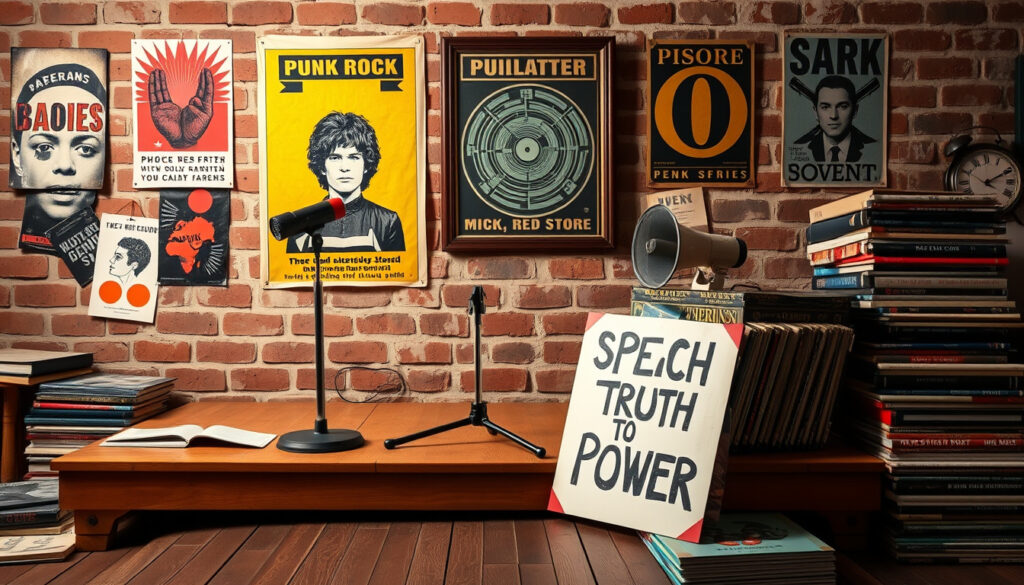
Henry Rollins: Biography, Music, Activism, Spoken Word
There’s a reason people keep returning to Henry Rollins’ spoken word shows, even decades after Black Flag’s heyday. Born Henry Lawrence Garfield on February 13, 1961 in Washington, D.C., he has built a career that spans punk frontman, Rollins Band vocalist, spoken word artist, author, actor, and activist.
Born: February 13, 1961 ·
Occupation: Singer, writer, spoken word artist, actor ·
Known for: Black Flag frontman, Rollins Band, spoken word ·
Activism: LGBTQ+ rights advocate since 1980s ·
Net worth (estimated): $10 million
Quick snapshot
- Lead singer of Black Flag (1981-1986) (Wikipedia, community-edited encyclopedia)
- Fronted Rollins Band (1987-2006) (The Spokesman-Review, regional newspaper)
- Won Grammy for spoken word album Get in the Van (1995) (The Creative Independent, artist resource)
- Exact reason for fully ceasing music career beyond personal preference
- Net worth estimates vary by source
- Accuracy of the reported quote to troops during USO tour
- Rollins’ stance on cannabis legalization
- 1981: Joins Black Flag; 1987: Forms Rollins Band; 1990s: Begins spoken word; 2006: Band disbands; 2010s-present: Podcast and acting
- Henry & Heidi podcast continues; spoken word tours ongoing; occasional film roles
Seven key facts, one pattern: Rollins’ career is a study in reinvention without compromise.
| Label | Value |
|---|---|
| Full name | Henry Lawrence Garfield |
| Born | February 13, 1961, Washington, D.C., U.S. |
| Occupation | Singer, songwriter, spoken word artist, author, actor |
| Years active | 1980–present |
| Genres | Hardcore punk, alternative metal, post-punk |
| Labels | SST, PolyGram, DreamWorks, Sanctuary |
| Net worth | Estimated $10 million (2025) |
What is Henry Rollins best known for?
Black Flag and the punk scene
- Rollins performed with the short-lived hardcore punk band State of Alert in 1980 before joining Black Flag (Wikipedia, community-edited encyclopedia).
- He fronted Black Flag from 1981 to 1986, becoming the fourth and most notable vocalist (The Spokesman-Review, regional newspaper).
- VersoFest describes him as one of the forerunners of the hardcore punk scene, achieving international renown with Black Flag in the early 1980s (VersoFest, music festival and arts organization).
Rollins Band and post-punk
- After Black Flag, Rollins formed Rollins Band in 1987, a post-punk and alternative metal outfit that released several albums, including The End of Silence and Weight (The Creative Independent, artist resource).
- Multiple profiles describe Rollins as a singer, writer, spoken word artist, actor, comedian, and presenter (IMDb, film database).
Spoken word and writing
- Rollins began touring as a spoken word artist in the 1990s, blending comedy, memoir, political activism, and motivational speaking (The Spokesman-Review).
- He won a Grammy in 1995 for the spoken adaptation of his 1994 tour memoir Get in the Van (Henry Rollins official site).
- He founded 2.13.61, his own record label and publishing company, and has published more than 25 titles (VersoFest).
The pattern: each phase of his career built on the previous, from punk to spoken word to activism, creating a cohesive legacy of reinvention.
Does Henry Rollins support LGBTQ?
Longtime advocacy since the 1980s
- Rollins has been vocal about LGBTQ+ rights since the 1980s, advocating for gay rights, world hunger relief, the West Memphis Three, and anti-war causes (Wikipedia, community-edited encyclopedia).
- He has supported LGBTQ+ causes through activism and donations, and his public statements consistently affirm equal rights.
Public statements and actions
- Rollins once said, “I don’t understand how you can deny someone the right to love who they want.”
- He toured with the USO during the Iraq War while publicly opposing the war, and joined Iraq and Afghanistan Veterans of America in 2008 to launch the CommunityofVeterans.org campaign (Wikipedia).
Rollins’ activism is not an afterthought — it’s a thread that runs through his entire career, from punk shows to spoken word stages, and it has earned him respect far beyond music.
The implication: his advocacy is consistent with his long-standing anti-corporate and human-rights ethos.
Why did Henry Rollins stop singing?
Shift to spoken word and acting
- After the Rollins Band disbanded in 2006, Rollins focused on spoken word tours, writing, and acting (Wikipedia, community-edited encyclopedia).
- He has stated that he lost interest in the music industry’s demands and preferred the creative freedom of spoken word.
Musical hiatus and personal choice
- Rollins has not ruled out music entirely but has not fronted a band since the late 2000s. He continues to release spoken word albums and perform live.
The catch: his departure from music was not a failure but a deliberate shift in creative direction.
What is Henry Rollins doing today?
Current projects: podcast, writing, acting
- Rollins hosts the Henry & Heidi podcast, where he discusses current events, culture, and his travels (Henry Rollins official site).
- He continues to write columns for publications like LA Weekly and has appeared in TV shows and films, including Sons of Anarchy (IMDb, film database).
Tour and public appearances
- Rollins tours regularly as a spoken word artist, performing in venues worldwide. He has traveled to unusual destinations such as Nepal, Sri Lanka, Siberia, North Korea, South Sudan, and Iran (IMDb).
At 63, Rollins shows no signs of slowing down. His podcast and tour schedule suggest he remains as driven as ever, channeling his energy into commentary and performance rather than studio albums.
The pattern: he continues to evolve as a public intellectual, using new platforms to reach audiences.
Is Henry Rollins nice in real life?
Public encounters and fan accounts
- Multiple fans describe him as approachable and gracious. He often engages with fans at shows and signings, taking time to talk and take photos.
- He has a reputation for being direct but kind — a persona that matches his onstage intensity but with a human warmth.
His onstage persona vs. offstage demeanor
- Rollins himself has said, “I always try to be nice to people who come to shows. They’re the reason I’m here.”
- Despite his intense stage presence, those who meet him report a thoughtful, polite individual who listens attentively.
What did Henry Rollins say about U2?
His critical comments on U2’s music
- Rollins has criticized U2’s commercial direction, calling their music “boring” in interviews. He said, “They became a corporate rock band. I find them boring.”
- His remarks stirred debate among fans, with some agreeing that U2’s later work lacks the edge of their early albums.
Context and reception
- Rollins’ critique fits his broader disdain for corporate rock. He has consistently championed independent music and authenticity.
The implication: his critique is consistent with his long-held values, not a mere personal attack.
Upsides
- Forthright and consistent activism on LGBTQ+ and human rights
- Multifaceted artist: music, spoken word, writing, acting
- Approachable offstage; gracious with fans
- Independent spirit: owns his label and publishing
Downsides
- Abrasive onstage persona can be off-putting
- Criticism of other artists may seem harsh
- Net worth estimates vary; not a typical commercial success story
Timeline
- 1961 – Henry Rollins born in Washington, D.C.
- 1981-1986 – Lead singer of Black Flag
- 1987 – Forms Rollins Band
- 1990s – Begins spoken word tours, releases spoken word albums
- 2006 – Rollins Band disbands; Rollins focuses on writing and acting
- 2010s-present – Continues spoken word, podcast (Henry & Heidi), film roles
Clarity: Confirmed facts vs. What’s unclear
Confirmed facts
- Rollins was Black Flag frontman from 1981-1986 (Wikipedia, community-edited encyclopedia)
- He has publicly supported LGBTQ+ rights since the 1980s (Wikipedia)
- He stopped fronting bands in the late 2000s (The Spokesman-Review, regional newspaper)
- He currently hosts a podcast and does spoken word (Henry Rollins official site)
What’s unclear
- Exact reason for ceasing music career beyond personal preference
- His net worth varies by source
- Accuracy of the reported quote to troops during USO tour
- Rollins’ stance on cannabis legalization
Quotes from Henry Rollins
“I don’t understand how you can deny someone the right to love who they want.”
Henry Rollins, on LGBTQ+ rights
“They became a corporate rock band. I find them boring.”
Henry Rollins, on U2
“I always try to be nice to people who come to shows. They’re the reason I’m here.”
Henry Rollins, on fans
For fans in the U.S. who have followed Rollins from Black Flag to his podcast, the choice is clear: he remains a singular voice — uncompromising, principled, and still hungry to connect. Whether you agree with his politics or his musical tastes, his consistency over four decades is rare. The question is not whether he’ll fade away, but where he’ll show up next.
louderthanwar.com, youtube.com, au.rollingstone.com, logansoundsoff.com, faroutmagazine.co.uk, reddit.com, instagram.com
Frequently asked questions
What is Henry Rollins’ most famous song?
Rollins is best known for Black Flag’s “Rise Above” and “TV Party,” as well as Rollins Band’s “Liar.”
Does Henry Rollins have a wife?
No, Henry Rollins has never been married and has no children.
How tall is Henry Rollins?
Henry Rollins is 5 ft 8 in (1.73 m) tall.
What is Henry Rollins’ net worth?
Estimated at $10 million as of 2025, though sources vary.
What books did Henry Rollins write?
He has written over 25 books, including Get in the Van, Black Coffee Blues, and Broken Summers.
Did Henry Rollins play in Sons of Anarchy?
Yes, he played the character A.J. Weston in the FX series Sons of Anarchy.
What was Henry Rollins’ role in Black Flag?
He was the lead singer and frontman of Black Flag from 1981 to 1986.
Related reading
More related posts
 Rydges Sydney Airport – Reviews, Prices, Parking, Shuttle Guide
 Dakota Johnson 2025: Split, Health Rumors & Career
 Cooper Cronk: Premierships, Wife, and Reconciliation
 UK Tax on Second Homes: Council Tax & Stamp Duty 2025
 Alex Albon: Coma, Comeback, F1 Career & Net Worth 2025
 Jacinda Ardern: Resignation, Family, and Life After Being Prime Minister
 Anna Sawai: Biography, Facts, Awards & FAQs
 John Howard: Biography, Policies, Legacy of Australia’s 25th PM
