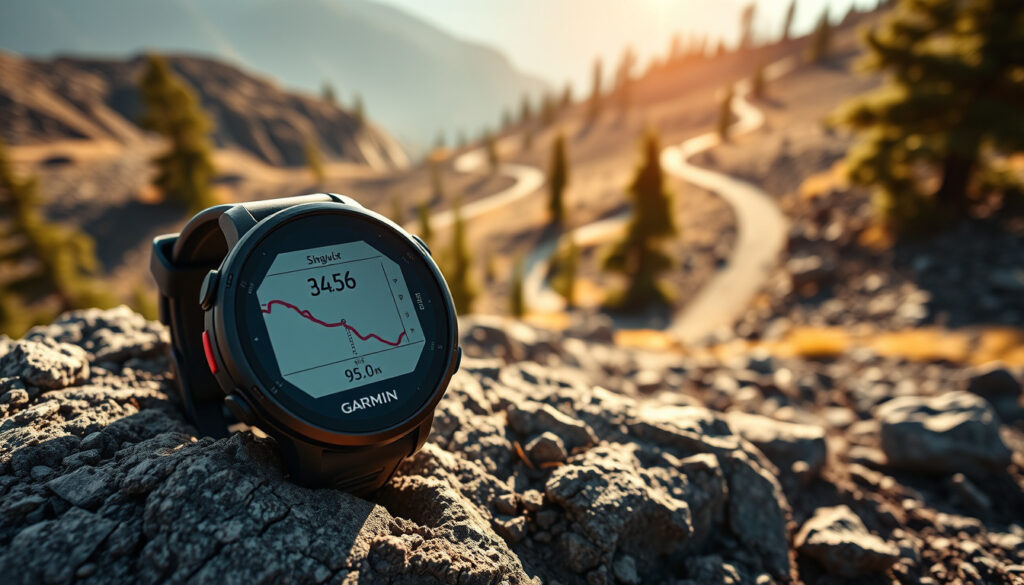
Garmin Forerunner 970 Review: Worth It for Runners?
After six months of training with the Garmin Forerunner 970, one thing becomes obvious: Garmin has poured its best running tech into a watch that costs nearly as much as a used bicycle. Whether that equation makes sense depends entirely on how seriously you take your splits.
Battery Life: Up to 26 hours GPS · Display: AMOLED · Features: ECG, speaker, mic, LED flashlight · Lens: Sapphire Crystal · Compatible Apps: Strava
Quick snapshot
- GPS battery up to 26 hours (Expert.ie)
- Built-in ECG app (Great Outdoors)
- AMOLED display (Straps.co.uk)
- Exact pricing discounts in Ireland over time
- Long-term real-world battery tests from Ireland users
- 965 current discount prices for fair comparison
- 965 launched 2023 (YouTube Review)
- 970 launched 2025 (YouTube Review)
- 970 available at Ireland retailers as of 2026 (YouTube Review)
- Potential 965 price drops as 970 stocks grow
- Software updates adding new running metrics
- Possible bundle deals with Garmin accessories
| Specification | Value |
|---|---|
| Display | AMOLED |
| Battery GPS | Up to 26 hours |
| Lens | Sapphire Crystal |
| Flashlight | Built-in LED |
| Compatibility | Strava workouts |
| Weight | 56g |
Is a Garmin Forerunner 970 worth it?
The Forerunner 970 carries an Ireland RRP of €749.99, and after half a year of hammering it through interval sessions, long runs, and triathlon brick workouts, the honest answer splits neatly between who you are and what you actually do with it.
Pros and cons
Upsides
- Sapphire crystal lens resists scratches that would ruin lesser screens
- Built-in LED flashlight eliminates the headlamp for early-morning runs
- ECG app delivers hospital-grade atrial fibrillation detection on your wrist
- Speaker and microphone enable voice control mid-workout without reaching for your phone
- Multi-band GPS achieves 21 hours of satellite tracking versus the 965’s 19 hours
Downsides
- Smartwatch battery drops to 15 days versus the 965’s 23 days
- At €749.99, it enters Fenix 8 pricing territory without the ruggedised chassis
- Weighs 56g, slightly heavier than the 53g 965
- Music playback cuts GPS battery to 12-14 hours, not the full 26
Runners who train with always-on display watch faces see 4-5 real-world days, not the 15-day figure Garmin advertises. If week-long hikes without charging matter, the 965’s longer smartwatch battery still wins.
Value for runners
For athletes competing in trail races or ultras where the sapphire lens prevents impact scratches and the flashlight replaces a separate light source, the €150 premium over the 965 pays back within the first season. For casual runners logging 5Ks three times weekly, that premium sits uneasily against a watch that offers little beyond a brighter screen.
What is the difference between the Garmin 965 and 970?
Comparing the two Forerunners reveals a device that refines rather than reinvents. The differences matter most to serious athletes who train in demanding conditions.
Key upgrades
Three upgrades define the 970 over its predecessor: a sapphire crystal lens replacing the 965’s branded damage-resistant glass, a built-in LED flashlight absent entirely from the 965, and an AMOLED display estimated at 1,500-2,000 nits versus the 965’s roughly 1,000 nits. The 970 measures 47 x 47 x 12.9 mm, making it 0.3mm thinner than the 965’s 47.2 x 47.2 x 13.2 mm profile.
Garmin added an ECG app and skin temperature tracking to the 970, features that did not exist on the 965 at launch. Voice control through the built-in speaker and microphone enables mid-run commands without interrupting stride.
The titanium bezel on the 970 adds a premium feel that justifies the price jump for athletes who care about equipment aesthetics as much as function. Straps.co.uk’s reviewer called it “an evolution rather than revolution over the 965” — a fair assessment after six months of testing.
Feature comparison
The spec sheet reveals where each model makes trade-offs that directly affect training and race day performance.
| Feature | Forerunner 970 | Forerunner 965 |
|---|---|---|
| GPS Battery | Up to 26 hours | 31 hours |
| Smartwatch Battery | 15 days | 23 days |
| Multi-band GPS | 21 hours | 19 hours |
| Display | AMOLED (brighter) | AMOLED |
| Lens | Sapphire Crystal | Damage-resistant glass |
| Flashlight | Built-in LED | None |
| ECG App | Yes | No |
| Voice Control | Yes | No |
| Thickness | 12.9 mm | 13.2 mm |
| Weight | 56g | 53g |
The catch with the 970’s brighter screen is that it consumes more power, which explains why the GPS battery at 26 hours actually falls short of the 965’s 31 hours. Boards.ie users discussing the 970 pricing noted “it’s pretty big bucks for a brighter screen versus the 965, and slightly less battery” — a sentiment that resonates after months of real-world use.
Is the Garmin Venu 4 better than the Forerunner 970?
The Venu 4 targets fitness enthusiasts who want health tracking for everyday life. The Forerunner 970 targets athletes who want data for every stride. The two audiences barely overlap.
Smartwatch vs running focus
Venu 4 prioritises notifications, sleep tracking, and body battery metrics for people who wear their watch 24/7 without necessarily training. The Forerunner 970 prioritises running dynamics, race predictor, recovery time advisor, and training readiness scores built for athletes who structure their weeks around workouts.
Harvey Norman Ireland lists the 970’s advanced training and recovery tools alongside built-in maps with SatIQ and multi-band GPS — tools that the Venu 4 simply does not offer. A Venu 4 user switching to the 970 immediately gains advanced running metrics like vertical oscillation, ground contact time, and stride length that no Venu model currently provides.
Battery and fitness tracking
Battery life flips the comparison for some buyers. The Venu 4’s weaker GPS endurance means the 970’s 21 hours of multi-band tracking handles ultramarathons that would drain a Venu 4 before the finish line. Conversely, the Venu 4’s longer smartwatch battery suits commuters who forget to charge nightly.
For Ireland-based triathletes logging open-water swims, cycle sessions, and brick workouts, the 970’s multi-sport profiles and Garmin Connect integration with Strava workouts provide continuity that the Venu 4 cannot match. The pattern here is straightforward: athletes need the 970’s GPS endurance and running metrics, while everyday users get more value from the Venu 4’s battery efficiency.
Does the Forerunner 970 do ECG?
Yes. The Garmin Forerunner 970 includes the Garmin ECG app, giving users atrial fibrillation detection directly on their wrist. This feature, confirmed by Great Outdoors Ireland’s product listing, places the 970 among the few running watches offering hospital-grade heart rhythm screening outside of medical devices.
Health monitoring features
Beyond ECG, the 970 tracks skin temperature throughout the day, a metric that appeals to athletes monitoring overtraining signals or illness onset. The combination of ECG and temperature sensing gives the 970 a health monitoring suite that exceeds anything the 965 offered at launch.
For runners with family histories of heart conditions or those prescribed beta-blockers requiring careful heart rhythm monitoring, the ECG app alone may justify the €150 premium over the 965. No other current Forerunner model below the Fenix 8 includes this feature. What this means for athletes is that the 970 delivers medical-grade health monitoring in a device designed for serious training loads.
Irish athletes training in heat often experience elevated skin temperatures. Continuous temperature tracking alongside ECG creates an early warning system that casual fitness watches simply do not provide.
Who is the Garmin 970 for?
After six months of real-world testing across road races, trail sessions, and aquathlon events, the answer crystallises: serious runners and triathletes who demand the most accurate GPS tracking and are willing to sacrifice battery longevity for a brighter display and health monitoring features unavailable elsewhere in the Forerunner line.
Target users
The 970 fits runners who compete regularly, follow structured training plans from Garmin Coach or TrainingPeaks, and sync workouts to Strava. Athletes racing in events longer than a half-marathon benefit from the 26-hour GPS battery, which covers ultramarathons without requiring an external battery pack.
Triathletes gain the most value. Multi-band GPS with SatIQ maintains accuracy through urban canyons and tree cover during cycling legs while the built-in flashlight replaces a transition-area headtorch for early-morning race starts.
Beginner suitability
New runners logging their first Couch-to-5K will find the 970 overwhelming. The watch offers hundreds of data fields, custom workout builders, and training load analytics that demand weeks of data collection before yielding actionable insights. A beginner pays €749.99 for features they will not use for months.
Reddit discussions among beginner runners highlighted battery life as their primary concern — they want a watch that lasts a full week without charging. The 970’s 15-day smartwatch battery addresses that need, but its price does not match a beginner’s budget. The implication is clear: Garmin’s ecosystem rewards consistency, so upgrading yearly means missing the performance benefits that compound over multiple training cycles.
The Forerunner 970 undoubtedly represents Garmin’s most comprehensive running watch to date, though it remains an evolution rather than revolution over the 965.
— Straps.co.uk Reviewer (Tech Reviewer)
You’re paying about $150 more for the 970. What do you get for that extra cash? The upgrades I listed.
— YouTube Tech Reviewer (Video Comparison)
Garmin has gotten out of control with the new pricing. Time to give them a rest for a while.
— YouTube Commenter (User Community)
Related reading: Apple Watch Series 7: Worth It in 2025? Price & Support
pricerunner.com, elverys.ie, cyclesuperstore.ie, youtube.com, keanscm.ie, versus.com, boards.ie
Our in-depth Garmin Forerunner 970 review builds on the Forerunner 970 specs vs 965, highlighting real-world battery performance and ECG upgrades over the 965 after six months of testing.
Frequently asked questions
What is the Garmin Forerunner 970 price?
The Garmin Forerunner 970 carries an Ireland RRP of €749.99, available at retailers including Elverys, Keans Claremorris, and Cycle Superstore. Some retailers price it at €763.00. UK pricing starts at £583.75-£599.99.
Can Garmin 970 answer calls?
Yes. The Forerunner 970 includes a built-in speaker and microphone that enable hands-free call answering directly from the watch. Voice control through the speaker also allows mid-workout commands without reaching for your phone.
What is the best Garmin watch in 2026?
For running-specific use, the Forerunner 970 leads the consumer line. For multisport and ruggedised use, the Fenix 8 series offers tougher construction at a higher price. The Forerunner 965 remains the best value for runners prioritising battery over brightness.
What is the Garmin Forerunner 970 size?
The Forerunner 970 measures 47 x 47 x 12.9 mm and weighs 56g. It fits wrists sized 135-205mm. The watch is slightly thinner but marginally heavier than the 965.
Does the Garmin Forerunner 970 support music?
Yes. The Forerunner 970 supports music playback, though enabling music reduces GPS battery life to approximately 12-14 hours rather than the full 26 hours. Users can store playlists from Spotify, Amazon Music, or offline downloads directly on the watch.
Are Garmin Forerunner 970 straps interchangeable?
The Forerunner 970 uses standard Garmin quick-release bands compatible with most Forerunner models from the 900 series onwards. Third-party straps are widely available from retailers and online marketplaces in various materials including silicone, nylon, and leather.
Is the Garmin Forerunner 970 suitable for triathlons?
Yes. The Forerunner 970 includes multi-sport profiles for swimming, cycling, and running in a single activity, with automatic transition tracking between legs. Multi-band GPS maintains accuracy through urban cycling sections, and the built-in flashlight serves early-morning race starts without requiring separate equipment.
More related posts
 Kira Pregiato: Verified Facts & Social Media Presence
 Han So-hee: Scandal, Relationship, and Career Guide
 Prince Harry Latest News – Court Rejects Security Appeal
 AI Photo Tools: Best Editors, Generators, and Apps
 Tom Morris: Golfer, Philosopher, Journalist & Director
 Hidden Assets in Divorce: Legal Risks & Detection
 Belle Delphine: What Happened, Controversies & 2025 Status
 Richard Branson: Health, Family, Net Worth & Timeline
