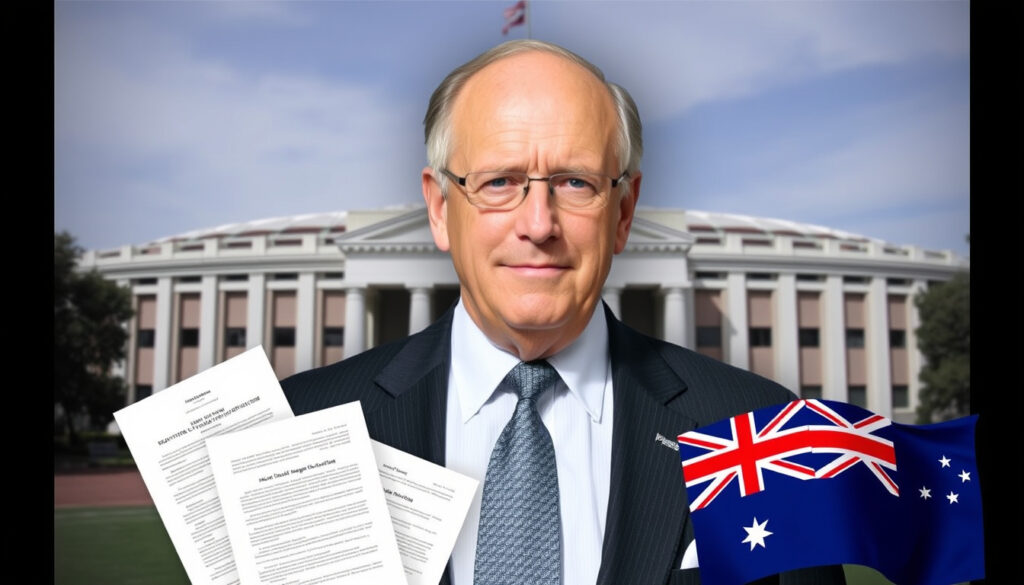
John Howard: Biography, Policies, Legacy of Australia’s 25th PM
Few Australian prime ministers remain as divisive as John Howard. His 11 years in office reshaped the country through swift gun control reforms, a controversial tax overhaul, and a refusal to apologise to Indigenous Australians that still fuels debate. Here is a clear look at his career, his decisions, and the mixed legacy he left behind.
Prime Minister of Australia: 1996–2007 ·
Political party: Liberal Party of Australia ·
Born: 26 July 1939, Sydney, Australia ·
Education: University of Sydney (LLB) ·
Notable legislation: National Firearms Agreement (1996) ·
Successor: Kevin Rudd
Quick snapshot
- Howard served as 25th Prime Minister from 11 March 1996 to 3 December 2007 (National Archives of Australia).
- He introduced the National Firearms Agreement after the Port Arthur massacre (National Archives of Australia).
- He refused to issue a formal apology to Indigenous Australians (Wikipedia).
- He introduced the Goods and Services Tax (GST) (National Museum of Australia).
- Why Howard refused to apologise is debated; some point to political strategy, others to personal conviction (Wikipedia).
- The long-term economic impact of selling Australia’s gold reserves is still assessed by economists (National Museum of Australia).
- Howard’s overall legacy remains polarised, with strong support and strong opposition (National Museum of Australia).
- The effectiveness of his gun control reforms in reducing gun violence is a subject of ongoing academic discussion (Wikipedia).
- The impact of his Pacific Solution on asylum seekers’ rights is still legally and ethically debated (Wikipedia).
- 1996: Port Arthur massacre sparks gun reform within 12 days (National Archives of Australia).
- 2000: Introduction of the GST (National Museum of Australia).
- 2003: Australia joins the Iraq War (Wikipedia).
- 2007: Howard loses to Kevin Rudd (National Archives of Australia).
- Howard remains active as a commentator and speaker (Britannica).
- Historical assessment of his policies continues to evolve. (Britannica)
- His stance on Indigenous apology still shapes political discourse. (Britannica)
Nine facts about John Howard’s life and career, one pattern: a man of firm convictions who left deep, sometimes contradictory imprints on Australia.
| Attribute | Detail |
|---|---|
| Full name | John Winston Howard |
| Born | 26 July 1939, Sydney, Australia |
| Political party | Liberal Party of Australia |
| Prime Minister term | 11 March 1996 – 3 December 2007 |
| Predecessor | Paul Keating |
| Successor | Kevin Rudd |
| Spouse | Janette Howard (m. 1971) |
| Children | 3 |
| Education | University of Sydney (LLB) |
Why did John Howard refuse to say sorry?
The context of the apology debate
- The 1997 Bringing Them Home report recommended a formal apology for the Stolen Generations (Wikipedia).
- Howard argued that current generations should not accept guilt for past actions (National Museum of Australia).
Howard’s alternative: a statement of regret
- In 1999, Howard offered a motion of reconciliation using “regret” rather than “sorry” (Wikipedia).
- The motion recognised mistreatment of Aboriginal people as the “most blemished chapter” in Australian history (Wikipedia).
Impact on Indigenous relations
- Rudd delivered a formal apology on 13 February 2008 (National Museum of Australia).
- Howard’s refusal is seen by many as a defining and damaging feature of his legacy (National Museum of Australia).
The implication: Howard’s refusal remains a fault line in Australian political memory, separating those who see apology as owed from those who reject inherited guilt.
Who was John Howard and what was he famous for?
Early life and education
- John Winston Howard was born on 26 July 1939 in Sydney (Britannica).
- He studied law at the University of Sydney and worked as a solicitor (National Archives of Australia).
Entry into politics
- Howard was elected to the House of Representatives for Bennelong in May 1974 (National Archives of Australia).
- He became Leader of the Opposition first in 1985–1989 and again in 1995 (Britannica).
Key achievements as Prime Minister
- Howard was the 25th PM, serving from 1996 to 2007 — the second-longest term after Robert Menzies (National Museum of Australia).
- He passed the National Firearms Agreement after the Port Arthur massacre (National Archives of Australia).
- He introduced the Goods and Services Tax in 2000 (National Museum of Australia).
- He committed Australian troops to the Iraq War in 2003 (Wikipedia).
What this means: Howard’s fame rests on a paradox — praised for action on guns, criticised for inaction on apology.
What did John Howard do for Australia?
Gun control reforms
- Within 12 days of the Port Arthur massacre, Howard convened an emergency meeting that produced the National Firearms Agreement (National Archives of Australia).
- The agreement banned semi-automatic rifles and pump-action shotguns, required licensing and registration, and eliminated self-defence as a reason for ownership (National Archives of Australia).
- A buyback scheme paid about A$304 million to gun owners (National Archives of Australia).
Economic policies and the GST
- The Goods and Services Tax was introduced on 1 July 2000 (National Museum of Australia).
- Howard’s government pursued industrial relations and taxation reforms, including WorkChoices (National Museum of Australia).
Immigration and refugee policy
- Howard introduced the Pacific Solution, sending asylum seekers to offshore processing centres (Wikipedia).
- His government also abolished the Aboriginal and Torres Strait Islander Commission (ATSIC) in 2004 (National Museum of Australia).
Foreign policy and the Iraq War
- Australia joined the US-led coalition in Iraq in 2003, based on intelligence about weapons of mass destruction (Wikipedia).
- Howard also strengthened the alliance with the United States (Britannica).
The catch: Each major policy came with trade-offs, and Howard’s decisiveness earned both admiration and lasting resentment.
Why did John Howard do what he did?
Political ideology and motivations
- Howard was a conservative Liberal leader who believed in economic liberalism and social conservatism (Britannica).
- He favoured “practical reconciliation” over symbolic gestures for Indigenous Australians (Wikipedia).
Key decisions and their rationale
- Howard said he was determined to use his authority to pass gun reform after Port Arthur (Howard Library, UNSW).
- His support for the Iraq War was based on available intelligence about weapons of mass destruction (Wikipedia).
Criticism and legacy
- Howard faced criticism from rural constituents over gun control, but the reforms eventually gained bipartisan support (Wikipedia).
- His refusal to apologise to Indigenous Australians is seen as a major flaw by critics (National Museum of Australia).
The pattern: His consistency on principle earned loyalty from supporters and condemnation from those who saw his convictions as inflexible.
Did John Howard sell Australia’s gold reserves?
The gold sales decision
- The Howard government sold most of Australia’s gold reserves between 1997 and 2002 (National Museum of Australia).
- The decision was made to diversify reserves and reduce portfolio volatility (Wikipedia).
Economic context and criticism
- Gold prices rose sharply after the sale, leading to criticism that the timing was poor (Wikipedia).
- The sale was part of a broader Reserve Bank of Australia strategy (National Museum of Australia).
Long-term impact
- Economists still debate whether the sale was a strategic error given subsequent price increases (National Museum of Australia).
- The move is often cited in discussions about government investment strategy (Wikipedia).
The implication: The gold sale illustrates how even well-intentioned economic decisions can become part of a polarised legacy.
Timeline
- 26 July 1939 — John Howard born in Sydney, Australia.
- 1961 — Graduated with a law degree from the University of Sydney (National Archives of Australia).
- 1974 — Elected to the House of Representatives for Bennelong (National Archives of Australia).
- 1985–1989 — Leader of the Opposition (Britannica).
- 11 March 1996 — Became Prime Minister (National Archives of Australia).
- 28 April 1996 — Port Arthur massacre; Howard led gun control reforms (National Archives of Australia).
- 1999 — Issued a statement of regret to Indigenous Australians, not an apology (Wikipedia).
- 1 July 2000 — GST introduced (National Museum of Australia).
- 2003 — Australia joined the Iraq War (Wikipedia).
- 3 December 2007 — Lost election to Kevin Rudd (National Archives of Australia).
- 13 February 2008 — Kevin Rudd delivered the formal apology to Indigenous Australians (National Museum of Australia).
This chronology shows how Howard’s decisions — from gun reform to the apology omission — shaped Australia’s political landscape over a decade.
What’s clear — and what’s not
Confirmed facts
- John Howard was Prime Minister of Australia from 1996 to 2007 (National Archives of Australia).
- He introduced the National Firearms Agreement after the Port Arthur massacre (National Archives of Australia).
- He refused to issue a formal apology to Indigenous Australians (Wikipedia).
- He introduced the Goods and Services Tax (GST) (National Museum of Australia).
- He committed Australian troops to the Iraq War (Wikipedia).
What’s unclear
- The exact reasons for his refusal to apologise are debated; some cite political strategy, others personal belief (Wikipedia).
- The long-term economic impact of selling gold reserves is still assessed by economists (National Museum of Australia).
- His legacy is polarised, with strong support and strong opposition (National Museum of Australia).
- The effectiveness of his gun control reforms in reducing gun violence is still a subject of academic debate (Wikipedia).
- The impact of his Pacific Solution on asylum seekers’ rights remains contested (Wikipedia).
What this means: Even confirmed facts leave room for interpretation, and the unresolved questions keep Howard’s legacy alive in public debate.
Howard’s gun control response, enacted in just 12 days, is still held up as a global model — yet the same speed of decision-making was absent when it came to Indigenous reconciliation. That contrast defines his legacy.
“I do not believe that the current generation of Australians should accept a burden of guilt for the actions of past generations.”
John Howard, explaining his refusal to apologise
“We apologise for the laws and policies of successive parliaments and governments that have inflicted profound grief, suffering and loss on our fellow Australians.”
Kevin Rudd, delivering the apology on 13 February 2008
“We have to ensure that the possession of weapons is subject to the most stringent controls.”
John Howard, on gun reform after Port Arthur
Howard the Conservative turned into a rapid-fire reformer on guns, while Howard the social liberal held firm against an apology — leaving a legacy that pleases and angers in roughly equal measure.
For Australians grappling with how to remember John Howard, the choice is clear: either the prime minister who made the country safer from gun violence and stronger economically, or the one who refused a simple “sorry” and took the country into a war that many later regretted. His legacy is not a single narrative — it’s a tension that will be debated for decades.
pmtranscripts.pmc.gov.au, facebook.com, celebrityspeakers.com.au, pursuit.unimelb.edu.au, facebook.com, howardlibrary.unsw.edu.au
For a deeper look at his time in office, we recommend John Howards biography, policies, and legacy, which details his major policies and lasting impact on Australia.
Frequently asked questions
What is John Howard’s net worth?
Howard’s net worth is not publicly disclosed. After leaving office, he has earned income from speaking engagements, board memberships, and book royalties, but no official figure is available.
How many children does John Howard have?
John and Janette Howard have three children: Melanie, Tim, and Richard.
Who is John Howard’s wife?
He has been married to Janette Howard (née Parker) since 1971. She is a former teacher and has been a supportive partner throughout his career.
What is John Howard doing now?
Howard remains active in public life as a commentator, speaker, and author. He serves on various boards and is a patron of several charities (Britannica).
How old is John Howard?
Born 26 July 1939, he is 85 years old (as of 2025).
What is John Howard’s education?
He earned a Bachelor of Laws (LLB) from the University of Sydney.
Is John Howard an actor?
No. John Howard (the prime minister) is not an actor. There is an English actor named John Howard, but they are different people.
What was John Howard like as a young man?
Howard grew up in suburban Sydney, the son of a garage proprietor. He was described as diligent and politically engaged from a young age, joining the Liberal Party in his teens and later working as a solicitor before entering parliament.
These answers address common curiosities about Howard’s personal life and current activities.
John Curtin: Australia’s Wartime Prime Minister — Another Australian leader who faced national crises.
Alfred Deakin: Biography, Achievements, Legacy — A reformist prime minister from an earlier era.
More related posts
 Kevin Federline: Life, Career, and New Memoir
 Rydges Sydney Airport – Reviews, Prices, Parking, Shuttle Guide
 Phil Mickelson: Illness, Net Worth, Controversies, and Career
 Rosé Blackpink: Answers to Your Most Asked Questions (2026)
 Shane Warne’s Cause of Death, Funeral, and Net Worth: Full Facts
 Jason Alexander: What Happened to the Seinfeld Star
 North Face Puffer Jacket – Warmth, Fit and Care Guide
