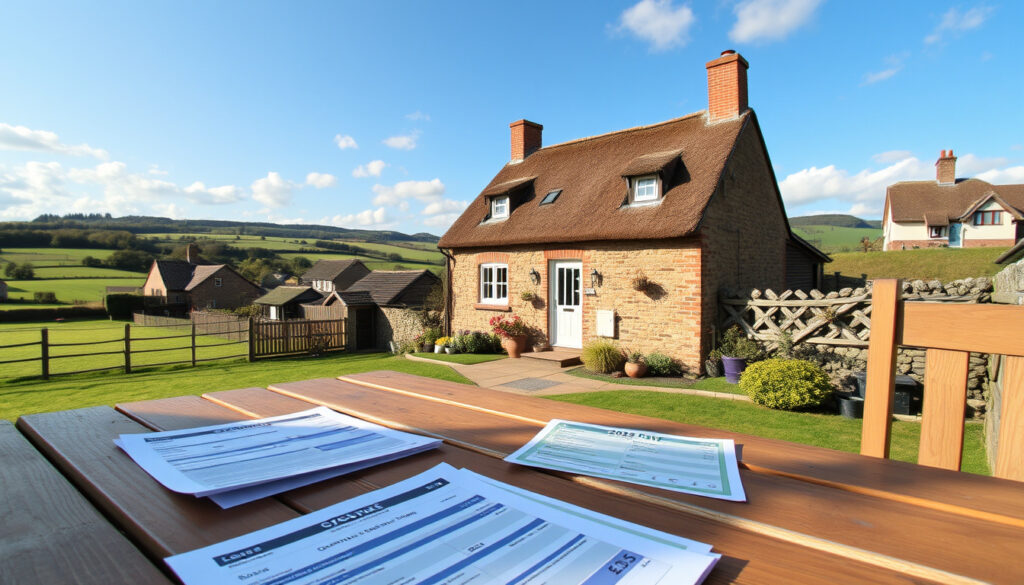
UK Tax on Second Homes: Council Tax & Stamp Duty 2025
If you own or are thinking about buying a second home in the UK, brace yourself for a more complicated tax picture than a decade ago. English councils can now add a 100% premium to your council tax bill from April 2025, stamp duty carries a permanent surcharge, and capital gains tax relief has quietly shrunk. Whether you’re weighing a holiday let in Cornwall or keeping a family flat in Edinburgh, here is what you will actually pay — and what the law still lets you avoid.
Second home council tax premium: Up to 100% from April 2025 · Stamp duty surcharge: 3% extra on top of standard rates · Empty property multiplier: Up to 4× normal bill after 10 years · CGT private residence relief: 36-month rule ending 2025
Quick snapshot
- 71% of English councils (211 of 296) charge the second home premium as of 2025 (GOV.UK)
- 170,000 dwellings in England were charged the second homes premium in 2025 (GOV.UK)
- Wales allows up to 300% premium since 2023 (Intelligent Insurance)
- Which of the remaining 25% of English councils will adopt the premium in future years (Intelligent Insurance)
- Whether the business rates loophole — using commercial classification to dodge council tax — will survive ongoing government scrutiny (Intelligent Insurance)
- Exact Scotland council premium rates, as each of the 32 councils sets its own level (Intelligent Insurance)
- 1 April 2025: 100% second home premium activates in England (GOV.UK)
- December 2024: 36-month CGT private residence relief period ends (Intelligent Insurance)
- 2024: Scotland’s 32 councils all introduce second home premiums (Intelligent Insurance)
- Additional councils may vote to adopt the premium as the 12-month notice periods expire (My Home Move Conveyancing)
- The government has signalled intent to close the business rates exemption used by some second home owners (My Home Move Conveyancing)
- SDLT thresholds remain under review; no further changes announced for 2026 (My Home Move Conveyancing)
How much tax do you pay on a second home in the UK?
The three main charges you will face as a second home owner are council tax premiums, Stamp Duty Land Tax surcharges, and capital gains tax on any eventual sale. Each operates under different rules, and the combined bill can be substantial.
Council tax premiums
From 1 April 2025, English councils gained the power to add a 100% premium on top of the standard council tax rate for second homes. The power comes from the Levelling Up and Regeneration Act 2023, and councils must vote and provide 12 months’ notice before applying it (Intelligent Insurance). As of 2025, 211 out of 296 English authorities (71%) were already charging the premium, covering 170,000 dwellings in total (GOV.UK).
Scotland introduced second home premiums across all 32 councils by the 2024-25 financial year (Intelligent Insurance). Wales has allowed up to 300% since April 2023, with areas like Gwynedd applying a 150% uplift and Pembrokeshire expecting to raise £12.5 million from premiums in 2024-25 (Intelligent Insurance). Second homes can receive a discretionary 0–50% council tax discount at local authority discretion (GOV.UK), and no premium applies for up to 12 months if the property is being actively marketed for sale or rent, or is held under probate (GOV.UK).
A council that charged the premium still collected only £20,300 from it in 2025/26 — a figure described by Rushcliffe Borough Council as not sufficiently incentivising properties back into use. The policy has yet to prove it works as intended.
Stamp duty land tax surcharge
Since October 2016, buyers purchasing a second property in England and Northern Ireland pay a 3% surcharge on top of standard SDLT rates. From 1 April 2025, the standard nil-rate threshold dropped to £125,000, while first-time buyers now have a £300,000 nil-rate band (SAM Conveyancing). Properties priced above £500,000 no longer qualify for first-time buyer relief (SAM Conveyancing).
The actual SDLT rates post-April 2025 run at 0% on the first £125,000, 2% between £125,001 and £250,000, and 5% from £250,001 to £925,000 for standard buyers. Adding the second home surcharge means these figures jump considerably. You can avoid the surcharge entirely if you are selling your main residence and buy a new one within three years — HMRC will refund the extra SDLT on request (FSL Accountancy).
Capital gains tax implications
When you sell a second home, CGT is due on any gain. The key relief is private residence relief, which exempts the property for the period it was your main home. Until December 2024, you could claim relief for the final 36 months of ownership even after moving out — a rule that incentivised holding onto property. That extended period has now ended, reducing the window for tax-free sale significantly (Intelligent Insurance).
What are the disadvantages of owning two homes in the UK?
Beyond the obvious mortgage and maintenance costs, owning two homes in the UK carries specific fiscal penalties that single-home owners do not face. These disadvantages compound quickly if you are keeping the property rather than renting it out.
Higher council tax bills
In areas where the 100% second home premium applies, your bill effectively doubles. For a property with a band D council tax charge of £2,000 per year, that becomes £4,000. Local authorities can vote to apply the premium without prior consultation, and approximately 25% of English councils had not enacted it for 2025 — but many of those have already given the required 12-month notice and are expected to follow (Intelligent Insurance).
Increased stamp duty costs
The SDLT surcharge adds 3% on every purchase. On a £400,000 property, that is £12,000 extra before you even begin renovations or furnish the second home. First-time buyers purchasing a second property accidentally can still qualify for the surcharge unless they sell their first home within three years — a narrow window that requires careful planning (FSL Accountancy).
Empty property charges
Homes left empty for extended periods attract escalating charges. From 1 April 2024, councils can apply up to 100% premium on properties empty for one to two years, and up to 200% for properties empty two to five years. Properties empty for ten years or more can attract a charge equivalent to four times the standard council tax bill (GOV.UK). In 2025, 153,000 dwellings were charged the empty homes premium, up 27.9% from the previous year (GOV.UK).
A second home that sits empty for more than a year in a council that has adopted the premium effectively costs double council tax — even before the second home premium applies. For a band D property, that means at least £4,000 per year in council tax alone.
How to avoid tax on second homes in the UK?
The word “avoid” matters here — the distinction between tax mitigation (within the law) and evasion is not academic. The following strategies operate within current rules, though some sit in grey areas that may not survive the current government’s crackdown agenda.
Use primary residence exemption
The most straightforward method is ensuring only one property carries second home status at any time. If you genuinely move between two residences for work — for example, a medical professional working between a London flat and a rural practice — you can apply for a council tax exemption on one. Students, armed forces personnel, and those whose job requires living away from the main home may qualify for discounts or exemptions at local authority discretion (GOV.UK).
Convert to business use
Classifying a second property as a commercial entity — through letting it as a holiday let or operating it as a serviced office — can shift it from council tax into business rates. Business-rated properties are exempt from the council tax second home premium. However, this requires genuine commercial activity: listing the property with a letting agent, meeting minimum occupancy requirements for holiday lets, and maintaining business rate liability. The government has indicated it plans to tighten this route, and its future viability is uncertain (Intelligent Insurance).
Timing sales before 2025 CGT changes
If you were considering selling a second home, the December 2024 end of the 36-month extended private residence relief was a genuine cliff edge. Those who missed that deadline now pay CGT on a longer tail of ownership. No further changes to SDLT were announced for 2026 as of early 2026, so timing purchases before announced threshold changes remains a viable strategy for those who can plan ahead (My Home Move Conveyancing).
The business rates loophole has been described by ministers as a target for closure. Property owners relying on commercial classification to dodge council tax should monitor legislative updates closely — the exemption that made some second home ownership financially viable may not survive the current parliamentary session.
How to avoid second home council tax?
Council tax avoidance for second homes relies on either qualifying for exemptions or restructuring how the property is classified. Here is what the rules currently allow.
Apply for exemptions
If the property is being marketed for sale or rent, or is held under probate after a death, no premium applies for up to 12 months. This is an automatic exemption — you do not need to apply — but it requires documented evidence of active marketing or probate proceedings (GOV.UK).
Make it your main residence
If the property genuinely becomes your primary home — you live there, register to vote there, and your mailing address reflects it — it cannot be charged the second home premium. HMRC uses a facts-and-circumstances test for determining main residence for CGT purposes, and the same principle applies for council tax. This means genuinely rotating between two properties is possible without triggering both the second home premium and SDLT surcharge.
Temporary occupancy rules
Certain occupations create automatic council tax discounts regardless of property ownership. Members of the armed forces, diplomatic staff, and those in job-related accommodation may qualify for exemptions that override second home premium charges. Each local authority applies these rules independently, and the criteria are strict (GOV.UK).
What is the 36 month rule?
The 36-month rule refers to a capital gains tax relief provision that allowed second home owners to claim private residence relief for up to three years after they had moved out and established a new main residence elsewhere. It was a significant tax shield for anyone who held property during a relocation period.
Capital gains tax relief
When you sell a property that was once your main home, private residence relief exempts the portion of the gain attributable to the period it served as your primary residence. Before December 2024, this relief extended for 36 months (three years) after you stopped living there — even if you had already moved into a new main residence. That meant holding a second home for three years after moving out was effectively CGT-free on the ownership tail.
Changes in 2025
From 1 December 2024, the extended 36-month period was removed. The final months of ownership now count as taxable gain if you are no longer living in the property at the time of sale. This change affects anyone who purchased a second home in the years before 2024 and planned to use the extended relief period as a holding strategy.
Impact on second homes
The practical effect is that second home owners who have not yet sold face a longer taxable tail. A property held for two years after moving out that sells in 2025 or later will have those final two years included in the CGT calculation. The rate of CGT on residential property is 18% for basic rate taxpayers and 24% for higher or additional rate taxpayers as of 2025.
Second home owners who bought before 2024 and still have not sold have lost a tax benefit that was previously automatic. The window has closed, and there is no indication of replacement relief. Those with gains should seek professional advice on timing any future sale.
Second home taxes in the UK: pros and cons
Upsides
- Holiday let income can be structured through self-assessment with mortgage interest relief available under Section 275 Finance Act
- Properties with genuine commercial activity shift from council tax to business rates, potentially lowering overall liability
- No SDLT surcharge applies if you sell your main residence and buy a second home within three years — a refund is available
- Probate and marketing exemptions allow temporary relief from council tax premiums for up to 12 months
Downsides
- 100% council tax premium doubles bills in most of England from April 2025
- 3% SDLT surcharge adds thousands to every purchase price
- Empty property charges reach 4× council tax after 10 years of vacancy
- 36-month CGT extended relief has ended, extending the taxable ownership period
- Business rates loophole faces government crackdown, making this avoidance route increasingly risky
- Scotland and Wales premiums are already higher than England’s — up to 300% in Wales
Steps to calculate your second home tax bill
Three categories of tax apply, and calculating them requires working through each layer separately before combining the total.
- Council tax: Find your property’s council tax band on the GOV.UK valuation list. Multiply the annual figure by your local authority’s premium rate — 0% if no premium applies, 100% if it does. Subtract any applicable discount (0–50% at local discretion). GOV.UK guidance sets the framework.
- SDLT at purchase: Apply the standard SDLT bands (0% to £125,000, 2% £125,001–£250,000, 5% £250,001–£925,000 from April 2025) to the purchase price. Then add the 3% second home surcharge to each band. Subtract SDLT already paid on a previous main residence if selling within three years — file a refund claim with HMRC within 28 days of completion.
- CGT on sale: Calculate the gain: sale price minus purchase price and allowable expenses (improvements, selling fees). Exempt the portion of ownership when the property was your main residence. Apply 18% or 24% CGT rate to the remaining gain. The 36-month extended relief is no longer available for sales from December 2024.
- Empty property charge: If the property sits vacant, check how long it has been empty. Apply escalating premiums: up to 100% for 1–2 years empty, up to 200% for 2–5 years, up to 300% (premium) plus second home premium for 5–10 years, and up to 4× council tax for 10+ years.
- Annual review: Reassess council tax premium status annually — more councils are voting to adopt the premium, and your property may shift from standard to premium-rated council tax without any action on your part.
Key milestones in UK second home taxation
The tax burden on UK second homes has intensified significantly over the past three years, with the Levelling Up and Regeneration Act 2023 triggering the most consequential change.
| Date | Event |
|---|---|
| 2023 | Levelling Up and Regeneration Act passed, enabling second home council tax premiums |
| 1 April 2023 | Wales begins applying up to 300% council tax premium on second homes |
| 1 April 2024 | Empty homes premium extended to properties empty for 1–2 years (up to 100%) |
| 2024–25 | Scotland’s 32 councils all introduce second home premiums |
| 1 April 2025 | England activates up to 100% second home premium; SDLT nil-rate threshold drops to £125,000 |
| December 2024 | 36-month extended CGT private residence relief ends |
| 2026 (ongoing) | Government signals intent to close business rates loophole; SDLT under review |
The implication: the pace of policy change since 2023 has compressed what were once routine tax planning strategies into narrow compliance windows.
What we know — and what we still don’t
The data picture is clearer for England than for Scotland or Wales, and several important questions remain open.
- Confirmed: 211 of 296 English councils are charging the second home premium as of 2025, affecting 170,000 dwellings (GOV.UK Council Taxbase statistics).
- Confirmed: The SDLT nil-rate threshold for standard buyers dropped to £125,000 from April 2025, and the first-time buyer threshold fell to £300,000 (SAM Conveyancing SDLT guide).
- Confirmed: Empty homes can attract up to 4× council tax after 10 years of vacancy, and 153,000 dwellings were charged the empty homes premium in 2025 (GOV.UK council tax guidance).
- Unclear: Which of the 85 English councils not yet charging the premium will adopt it before 2026.
- Unclear: Whether the business rates exemption route will survive government legislative intent to close it.
- Unclear: Scotland’s individual council premium rates — each of the 32 councils sets its own level, and no consolidated national table exists.
“211 out of 296 authorities (71%) reported charging the premium in 2025.”
— GOV.UK, Council Taxbase 2025 in England
“In 2025/26 just £20,300 was raised by the scheme… not sufficiently incentivising bringing properties back into use.”
— Rushcliffe Borough Council Cabinet, Rushcliffe Borough Council announcement
For second home owners, the policy landscape has shifted decisively against holding arrangements that were once routine. Councils in England now have the tools to penalise second home ownership through council tax, SDLT thresholds have tightened, and the CGT relief window has closed. The remaining avoidance routes — commercial classification and residency restructuring — face regulatory headwinds that make them precarious planning tools. Those considering a second home purchase should factor the full tax stack into their financial model from the outset rather than discovering the bill at renewal.
Related reading: Weekly Tax Table 2025
intelligentinsurance.co.uk, tembomoney.com, pricebailey.co.uk, premproperty.co.uk, francisgeorgesolicitor-advocate.com
Second home buyers must also account for the 3% stamp duty surcharge added to Stamp Duty rates from April 2025 when completing purchases in England and Northern Ireland.
Frequently asked questions
Can you legally live at two addresses in the UK?
Yes, you can be resident at two addresses, but only one property can be your main residence for council tax purposes at any given time. HMRC applies a facts-and-circumstances test to determine main residence for capital gains tax, considering where you are registered to vote, where your mail goes, and where you spend the majority of your time. If you genuinely alternate between two properties for work-related reasons, you may qualify for council tax discounts on one.
What is double council tax on second homes?
Double council tax is informal language for the 100% premium that English councils can add to second home bills from April 2025. A property with a standard £2,000 annual council tax bill would cost £4,000 per year with the premium applied. Wales allows up to 300% (triple), and Scotland’s councils set their own premium levels.
How does second home tax differ in Scotland?
Scotland’s second home premium is set by each of its 32 councils individually, meaning there is no single Scotland-wide rate. All 32 councils had introduced premiums by the 2024-25 financial year, but the exact rate varies by local authority. Scotland does not have the SDLT system — it uses Land and Buildings Transaction Tax instead, which also carries a surcharge on additional properties.
What happens to council tax on empty second homes?
Empty second homes can be charged both the second home premium and the empty homes premium simultaneously. Properties empty for 1–2 years can attract up to 100% extra council tax on top of any premium, rising to 200% for 2–5 years, and up to 300% plus the second home premium for 5–10 years. After 10 years, the multiplier reaches 4× the standard bill.
Are there exemptions for second home owners?
Yes. Properties being actively marketed for sale or rent, or held under probate, receive an exemption from the second home premium for up to 12 months. Job-related exemptions apply to certain armed forces personnel, diplomats, and those required to live away from their main home for work. Some councils offer discretionary 0–50% discounts, but these are not universal.
Does stamp duty apply to all second homes?
Yes, the 3% SDLT surcharge applies to all additional residential property purchases in England and Northern Ireland. The sole exception is if you are selling your main residence and buying a new one simultaneously — you have three years to sell the previous home and claim a refund of the surcharge. The three-year window resets with each new purchase.
More related posts
 Carl Thomas Dean: Dolly Parton’s Husband Dies at 82
 Lucas Bravo Biography: Relationships and Personal Life FAQ
 Garlic Prawns Recipe – Authentic 10-Min Spanish Tapas
 Reuben Kaye: Biography, Career, and Current Shows
 Sarah Jones: Who Are the Different Sarah Joneses? (Guide)
 James Nelson-Joyce: Biography, Net Worth, Height, and Movies
 Laptops for Sale in Ireland: Best Deals & Reliable Picks
 Rob Reiner Death: Murder Investigation and Tributes
