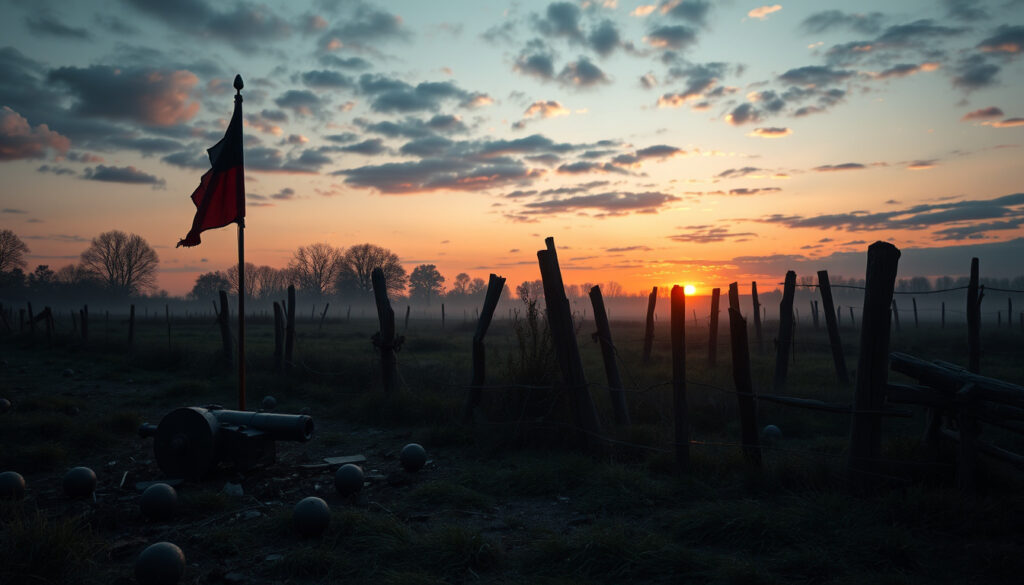
Civil War: Definition, Causes, and Key Examples | Guide
There’s something about the words “civil war” that cuts through the noise—whether it’s history textbooks or movie trailers, it signals a country turning on itself. If you’ve ever wondered what actually qualifies as a civil war, why the American one started, or how the Irish and English versions compare, you’re in the right place.
American Civil War deaths: 620,000–750,000 ·
Irish Civil War deaths: ~2,000 ·
English Civil Wars deaths: ~200,000 ·
Biggest killer in American Civil War: Disease ·
Civil War (2024 film) budget: $50 million
Quick snapshot
- 1861–1865 between Union and Confederacy (National Library of Ireland)
- Over 620,000 fatalities, driven largely by disease (National Library of Ireland)
- 1922–1923 over the Anglo-Irish Treaty (Britannica Kids)
- Pro-Treaty forces defeated the Anti-Treaty IRA (Wikipedia)
- 1642–1651 Royalists vs Parliamentarians (Wikipedia)
- Resulted in execution of Charles I and Commonwealth rule (Britannica)
- Alex Garland’s dystopian thriller, premiered March 2024 (Wikipedia)
- Earned over $120 million worldwide (Rotten Tomatoes)
What exactly is a Civil War?
A civil war is an armed conflict fought between organized groups within the same state or country, typically to take control of territory or government. The goal is usually political—seize power, declare independence, or force a change in leadership. Civil wars often involve high civilian casualties because the battlefield is everywhere, not just on a front line. As Britannica Kids (educational resource) explains, these conflicts tear communities apart from the inside.
General definition and characteristics
- Fighting between organized groups within the same sovereign state
- Political objective—control of government, territory, or ideology
- Often prolonged, with high civilian death tolls
- Devastating economic and social consequences for generations
Civil wars are fundamentally different from revolutions—revolutions aim to overthrow the entire political system, while civil wars often involve competing factions within the existing system. For example, the American Civil War was about secession versus union, not about abolishing government entirely.
Difference from other armed conflicts
The distinction matters because civil wars are not rebellions, coups, or international wars. A rebellion might be smaller and less organized; a coup targets the head of government quickly. Civil wars are prolonged, organized, and involve competing claims to legitimate authority. The Wikipedia definition emphasizes that the conflict must be between “organized groups” and not just random violence.
What started the Civil War and why?
The American Civil War began in 1861 after decades of tension over slavery, states’ rights, and westward expansion. The election of Abraham Lincoln in 1860 was the trigger—Southern states saw his anti-slavery stance as an existential threat. By February 1861, seven Southern states had seceded and formed the Confederate States of America.
Causes of the American Civil War
- Deep economic divide—industrial North vs agricultural South dependent on slave labor
- Disputes over federal authority vs states’ rights
- Expansion of slavery into Western territories
- Election of Abraham Lincoln in 1860
The United States faced a fundamental question: could a nation founded on liberty survive if half its economy rested on slavery? The answer took four years and 620,000 lives to settle.
The role of slavery and states’ rights
Slavery was the central cause—the National Library of Ireland notes that the conflict’s roots were “deeply embedded in the institution of slavery.” While Southern leaders argued for states’ rights, the right they most wanted to preserve was the right to own enslaved people. The Northern states, meanwhile, were moving toward abolition and saw slavery as incompatible with democratic ideals.
Secession and Fort Sumter
On April 12, 1861, Confederate forces fired on Fort Sumter in Charleston, South Carolina. That attack launched the war. Lincoln called for 75,000 volunteers to suppress the rebellion, and four more states joined the Confederacy. The National Library of Ireland confirms the war dates as 1861–1865, making it the deadliest conflict in US history.
Who won the Civil War?
The Union won the American Civil War in 1865. On April 9, Confederate General Robert E. Lee surrendered to Union General Ulysses S. Grant at Appomattox Court House in Virginia. The Union’s military and industrial advantages—more railroads, factories, and manpower—proved decisive against the Confederacy’s will to fight.
Union victory in 1865
The surrender effectively ended the Confederacy. By June, all remaining Confederate forces had laid down their arms. The Union was preserved, slavery was abolished (the 13th Amendment was ratified in December 1865), and the country began Reconstruction. But the cost was staggering: the National Library of Ireland estimates approximately 750,000 fatalities and 400,000 wounded.
What was the biggest killer of the Civil War?
Disease, not bullets, killed the most soldiers. Two-thirds of Civil War deaths—around 400,000 to 500,000 men—died from illnesses like dysentery, typhoid, pneumonia, and malaria. Cramped camps, poor sanitation, and limited medical knowledge made armies breeding grounds for disease. The National Library of Ireland records that more than half of the 620,000–750,000 total deaths were from disease, making it the single largest killer.
| Cause of death | Estimated share | Source |
|---|---|---|
| Disease (dysentery, typhoid, pneumonia) | ~65% | National Library of Ireland |
| Combat wounds | ~30% | National Library of Ireland |
| Other (accidents, executions, etc.) | ~5% | National Library of Ireland |
The implication: what made the Civil War so deadly wasn’t just the fighting—it was how quickly disease could spread through camps and hospitals. Medical care at the time was primitive, with limited understanding of germs or antiseptics.
What was the Irish Civil War about?
The Irish Civil War (1922–1923) was fought over acceptance of the Anglo-Irish Treaty. The treaty, signed in December 1921, ended the Irish War of Independence but created deep divisions. It established the Irish Free State as a dominion within the British Empire—with an oath of allegiance to the British Crown—and left six counties in Northern Ireland outside the new settlement.
The Anglo-Irish Treaty and its split
The treaty was a compromise: it gave Ireland more autonomy than it had under British rule, but fell short of the full republic many had fought for. As Britannica Kids (educational resource) explains, “The treaty left six counties in the north outside the new settlement,” which was unacceptable to many Republicans. The split turned former comrades into enemies—those who supported the treaty (Pro-Treaty) against those who opposed it (Anti-Treaty IRA).
Pro-Treaty vs Anti-Treaty forces
The Provisional Government of Ireland, backed by the pro-treaty faction, began building a National Army. The Anti-Treaty IRA refused to accept the treaty and seized buildings in Dublin in April 1922. The conflict escalated when the National Army shelled the Four Courts in June 1922, marking the start of open warfare.
Key events and outcome
The Irish Civil War lasted from June 28, 1922, to May 24, 1923. The Wikipedia (detailed historical entry) notes that the National Army secured Dublin by early July 1922, and all urban centers were captured by late August. A guerrilla phase followed for about 10 more months, but the anti-treaty forces were outgunned and exhausted. In May 1923, the IRA leadership issued a “dump arms” order, effectively ending the war. The pro-treaty National Army won militarily.
Has the UK ever had a civil war?
Yes—the English Civil Wars (1642–1651) were a series of conflicts between supporters of King Charles I (the Royalists) and those of Parliament (the Roundheads). These wars reshaped the British Isles, leading to the temporary abolition of the monarchy and the establishment of the Commonwealth of England under Oliver Cromwell.
The English Civil Wars (1642–1651)
- Royalists (Cavaliers) loyal to King Charles I
- Parliamentarians (Roundheads) led by Oliver Cromwell and the New Model Army
- Fought over royal authority vs parliamentary power, and religious conflicts
- Total deaths estimated at around 200,000 (Britannica (encyclopedic history))
Royalists vs Parliamentarians
At the heart of the conflict was the question of sovereignty—did the king rule by divine right, or did Parliament have authority over him? Charles I believed in the divine right of kings; Parliament believed it should have a say in taxation and governance. Religious tensions also played a role, with Puritans (who dominated Parliament) opposing Charles’s High Church policies and sympathies toward Catholicism.
Oliver Cromwell’s role and Commonwealth
Oliver Cromwell emerged as the military leader of the Parliamentarians. His New Model Army was disciplined, well-organized, and inspired by religious fervor. After decisive victories at Marston Moor (1644) and Naseby (1645), the Royalists were crushed. Charles I was captured, tried for treason, and executed on January 30, 1649. The monarchy was abolished, and the Commonwealth of England was established—a republic that lasted until the Restoration in 1660.
Why this matters: the English Civil Wars demonstrated that even the most powerful monarch could be held accountable by a determined Parliament. The precedent shaped modern British democracy, where the Crown is symbolic and Parliament holds real power.
Why is the Civil War movie controversial?
The 2024 film Civil War—written and directed by Alex Garland—is a dystopian thriller that imagines a modern-day civil war in the United States. Rather than a traditional historical drama, it portrays a fractured America where journalists travel across battle lines to document the collapse. The film generated intense debate for its unflinching violence and its refusal to take a clear political side.
Political and violent themes
Critics and audiences split over whether the film’s violence was responsible storytelling or exploitative. Some praised its anti-war message and its focus on journalism in crisis. Others accused it of being apolitical at a time when American politics are deeply polarized. The Wikipedia (film details) notes that the film premiered at South by Southwest on March 14, 2024, and was released in the US on April 12.
Public and critical reception
- Mixed to positive reviews—praised for direction and performances, debated for politics
- Strong box office: over $120 million worldwide (Rotten Tomatoes)
- Budget: $50 million (A24’s most expensive production to date)
The controversy reveals a cultural tension: audiences want their entertainment to take sides, but the film deliberately avoids picking one. By refusing to name parties or assign blame, Garland forces viewers to confront their own relationship with political violence—and some found that more unsettling than a clear villain.
Is Civil War a hit or flop?
Financially, the movie is a clear hit. With a $50 million production budget and over $120 million in global box office Rotten Tomatoes reports, it turned a solid profit for A24. Critically, reviews are mixed but leaning positive. The cultural impact, however, may be its most significant legacy—sparking conversations about how Americans imagine their own conflicts.
Clarity section
Confirmed facts
- American Civil War dates: 1861–1865 (National Library of Ireland)
- Union victory in 1865, Lee surrendered at Appomattox (National Library of Ireland)
- Irish Civil War fought over Anglo-Irish Treaty (Britannica Kids)
- English Civil Wars ended with execution of Charles I (Britannica)
- Disease caused ~65% of American Civil War deaths (National Library of Ireland)
- Civil War (2024) earned over $120M worldwide (Rotten Tomatoes)
- Anglo-Irish Treaty signed December 1921 (Britannica Kids)
Rumors and unclear claims
- Exact total death counts from disease—estimates range from 400,000 to 500,000
- Prevalence of homosexuality in Civil War ranks—historical records are incomplete and debated
- Long-term cultural impact of the 2024 film—still being debated
- Whether the film’s apolitical stance was intentional or evasive
Timeline
| Date | Event | Conflict |
|---|---|---|
| Abraham Lincoln elected president | American Civil War | |
| Fort Sumter attacked | American Civil War | |
| Emancipation Proclamation | American Civil War | |
| Lee surrenders at Appomattox | American Civil War | |
| Anglo-Irish Treaty signed | Irish Civil War | |
| Irish Civil War begins | Irish Civil War | |
| Ceasefire in Ireland | Irish Civil War |
“The American Civil War was the deadliest conflict in US history.”
National Library of Ireland (official cultural archive)
“The Irish Civil War was an armed conflict fought between organized groups within the same state.”
Britannica Kids (educational resource)
The pattern across all these conflicts is clear: civil wars don’t arise from simple disagreements—they emerge when fundamental questions about identity, governance, and justice cannot be resolved peacefully. For the United States, the question was slavery and union. For Ireland, it was whether to accept a compromised independence. For England, it was about the limits of royal power. And for the film, it’s about what happens when those questions go unanswered.
movies.fandom.com, maxread.substack.com, denofgeek.com, esquire.com, reddit.com, youtube.com, britannica.com
For a deeper look at the Irish Civil War and the 2024 film, this guide also covers the American Civil War’s causes and key examples.
Frequently asked questions
Was there homosexuality in the Civil War?
Historical records are limited, but evidence suggests that same-sex relationships existed among soldiers and civilians during the Civil War era. Letters, diaries, and court-martial records hint at emotional and physical bonds that were not always heterosexual. However, historians caution that the social stigma of the time means much of the record is incomplete or coded. The Wikipedia (historical overview) notes that “sodomy laws” existed but were rarely enforced against consensual acts. The exact prevalence remains unclear.
Is Civil War a hit or flop?
Financially, it’s a hit. The film earned over $120 million worldwide against a $50 million budget, as Rotten Tomatoes (review aggregator) reports. Critically, it received mixed-to-positive reviews, with a 78% approval rating on Rotten Tomatoes. Cultural impact is still being debated, but by box office and profile, it’s a success for A24.
What were the key battles of the American Civil War?
Major battles include Fort Sumter (April 1861, start of the war), First Bull Run (July 1861), Antietam (September 1862, bloodiest single day), Gettysburg (July 1863, Union victory that turned the tide), Vicksburg (also July 1863, gave Union control of the Mississippi), and Appomattox (April 1865, where Lee surrendered). The National Library of Ireland provides a detailed account of many of these engagements, including the Irish involvement.
What is the difference between a civil war and a revolution?
A civil war is an armed conflict between organized groups within the same country, usually over control of government or territory. A revolution aims to overthrow the entire political, social, or economic system—often involving regime change. For example, the American Civil War sought to preserve or dissolve the Union, not to abolish the system of government itself. The French Revolution, by contrast, sought to replace monarchy with a republic. Encyclopedia Britannica (reference source) notes that some conflicts can be both a revolution and a civil war, but the distinction is important.
How did the Irish Civil War end?
The Irish Civil War ended in May 1923 when the Anti-Treaty IRA issued a “dump arms” order and a ceasefire was declared. The Pro-Treaty National Army won militarily, having secured all major cities by August 1922. As Wikipedia (detailed historical entry) reports, the guerrilla phase lasted about 10 months after the fall of the urban centers. The Free State government went on to consolidate power and establish the independent Irish state.
Who were the leaders of the English Civil War?
King Charles I led the Royalist forces. Oliver Cromwell led the Parliamentarians, serving as commander of the New Model Army and later as Lord Protector. Other key figures include Prince Rupert (Royalist cavalry commander), Thomas Fairfax (Parliamentary general), and John Pym (Parliamentary political leader). The Britannica (encyclopedic history) provides profiles of each major leader.
Related reading: John Curtin: Australia’s Wartime Prime Minister · Train Wrecks: Definition, Slang Meaning, and Historic Disasters
More related posts
 Peter Falconio Murder: What Happened and Where Is Joanne Lees
 Jay Cutler: NFL Career, Bodybuilding, DUI, New Engagement
 Ugo Humbert: Ranking, Roland Garros 2025 & Personal Life
 Carl Weathers: Cause of Death, Tributes & Legacy
 Why Is Sean Strickland Suspended? UFC Ban & Record
 Kmart Ingle Farm – Opening Hours, Phone Number, and Store Info
 Normanville Caravan Park – Pet-Friendly Beachfront Guide
 Huda Beauty: Owner, Country, Quality & Luxury Status Explained
